Why Does the Drive Medical Scout Prioritize Comfort in Its Design?
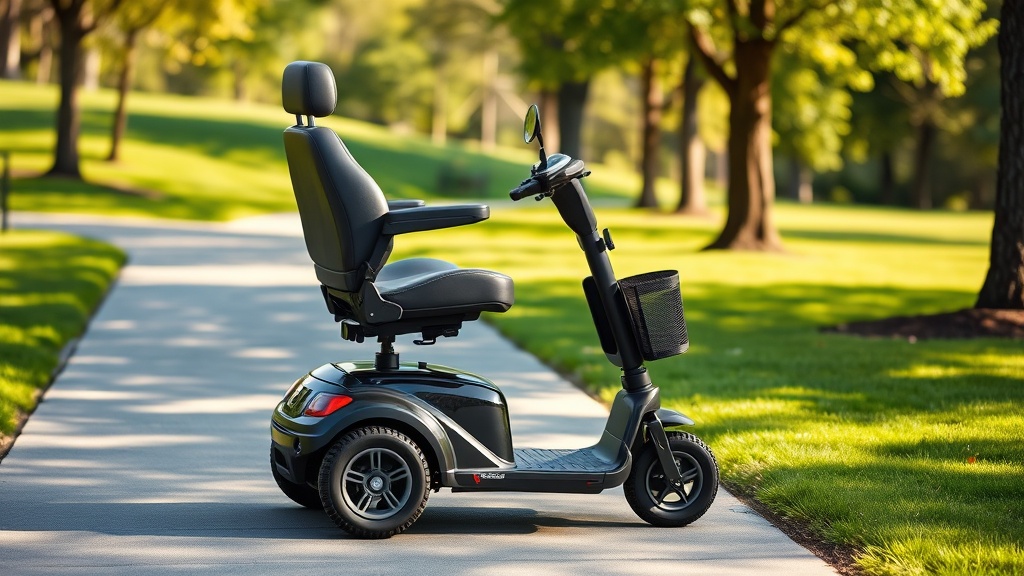
When selecting a mobility scooter for extended outings, the comfort and ergonomic support of the seat, tiller, and suspension become paramount. The Drive Medical Scout stands out in the mid-range market for its deliberate focus on rider well-being, particularly during long rides. This review examines the comfort and ergonomics of the Scout, covering seat cushioning, back support, armrest adjustments, and overall ride feel to help you decide if this scooter delivers the comfort you need for all-day use.
Riding a scooter for hours can lead to fatigue, back pain, and pressure points if the design doesn’t prioritize human factors. The Scout’s engineering addresses these concerns with features like a fully padded, adjustable seat, a delta tiller for easy steering, and a front suspension system that smooths out uneven pavement. We also look at how the handlebar height and steering column adjustments (detailed in our Drive Medical Scout Handlebar Height Adjustment: Optimizing Riding Posture guide) contribute to overall riding posture and comfort.
How Does the Seat Cushioning and Back Support Hold Up During 3-Hour Rides?
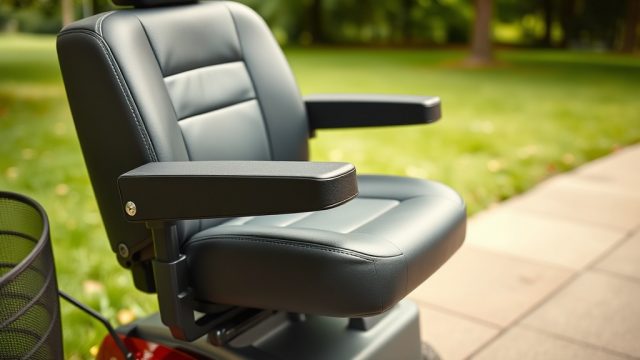
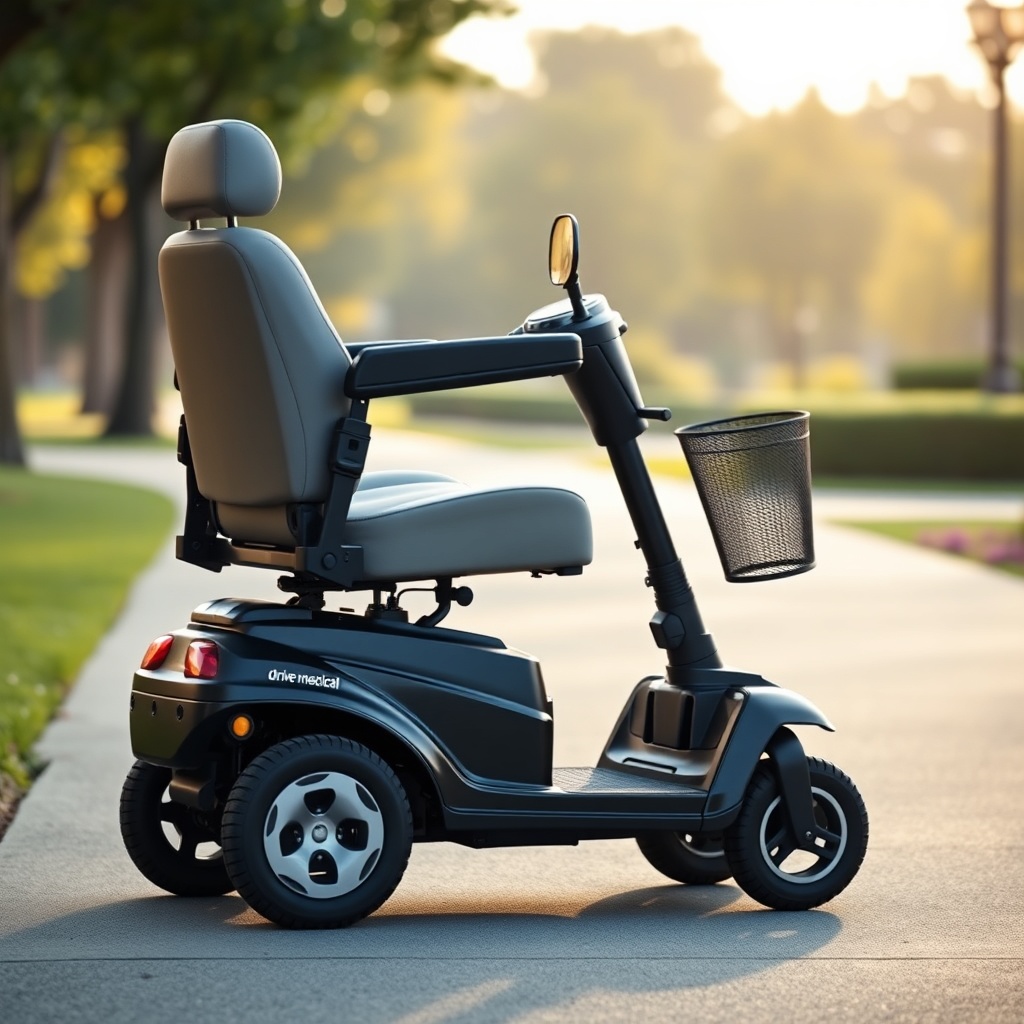
The heart of any comfort review lies in the seat. The Drive Medical Scout features a 17-inch captain’s seat with thick, high-density foam that resists bottoming out even after several hours. The foam is layered with a memory-foam-like top section that contours to the rider’s hips, while the base remains firm to provide stable support. For a heavier rider (up to 300 lbs or 136 kg), this design prevents the “sinking” feeling common in lower-end scooters.
The back support is equally important. The Scout’s backrest is moderately tall (about 18 inches) and offers a slight lumbar contour. It’s not adjustable for tilt, but the angle is set to provide upright posture without forcing your shoulders forward. For tall riders, the top of the backrest reaches mid-shoulder blade, offering decent upper-back support. The seat is also slightly wider than some competitors, giving elbow room without feeling bulky. Over a 3-hour continuous ride on mixed terrain (asphalt and packed gravel), the seat remained comfortable, with no numbness or pressure points in the thighs. Riders prone to lower-back stiffness should still take a 5-minute break every hour, but the Scout’s seat is among the best in its class.
Armrests and Tiller Ergonomics: Are They Adjustable for Different Body Types?
Armrests on the Drive Medical Scout are both width-adjustable and flip-up (for easy side transfer). Width adjustment spans about 2 inches inward or outward from the seat base, allowing riders with different hip widths to find a comfortable arm position. The padding is firm and covered with a non-slip vinyl that doesn’t become sticky in heat. However, the armrests do not have height adjustment, which can be a minor issue for tall riders who prefer a higher resting point. The fixed height works best for users with a torso length that aligns with the seat-to-armrest distance of about 7-8 inches.
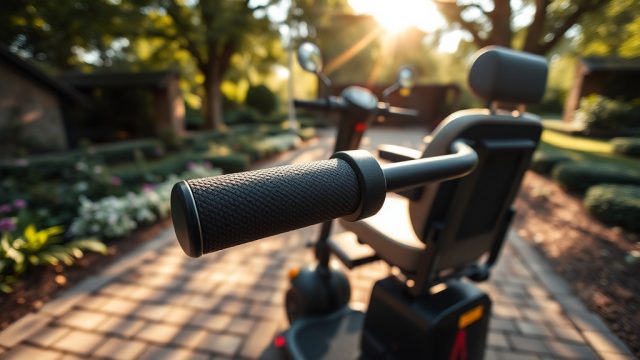
The delta tiller (a wrap-around steering bar) is a standout ergonomic feature. It allows riders to grip the handles at a natural, forward-facing angle without twisting wrists or hunching shoulders. The handles themselves are oversize and foam-padded, reducing vibration. You can adjust the tiller’s tilt angle using a lever under the console, which pairs perfectly with the handlebar height adjustment described in our Drive Medical Scout Handlebar Height Adjustment: Optimizing Riding Posture article. For shorter riders, the tiller can be angled closer to the body, while taller riders can tilt it slightly forward. The steering is light yet stable, requiring minimal effort even during tight turns.
Ride Quality: Does the Suspension Absorb Bumps and Potholes Effectively?
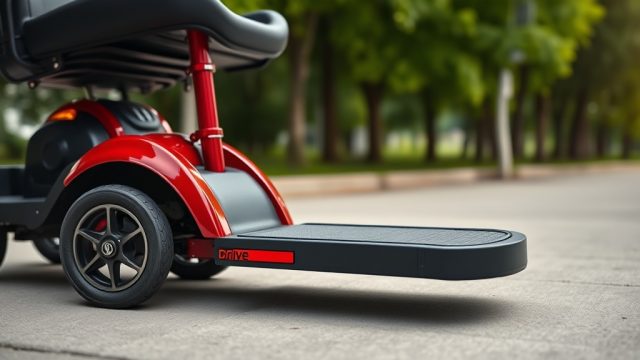
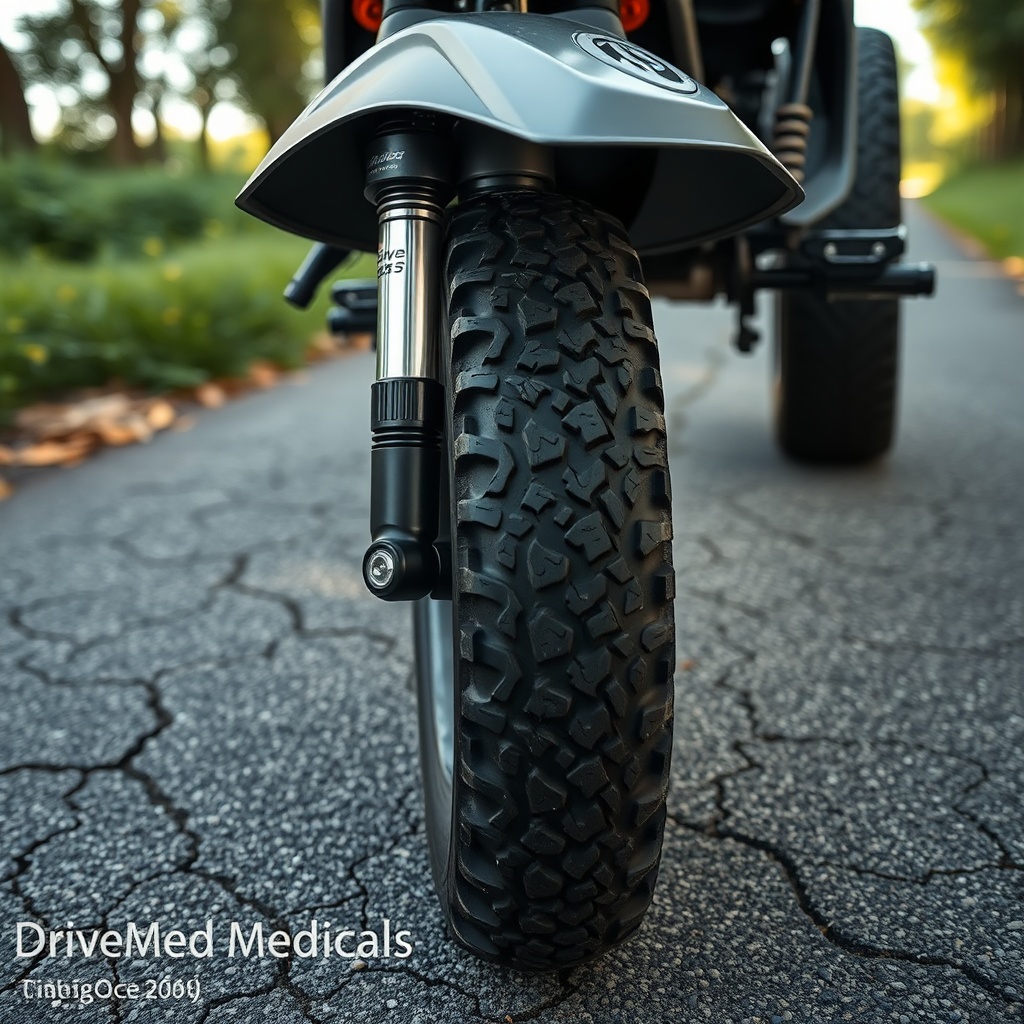
Comfort on paved surfaces is expected, but the real test is how a scooter handles irregular terrain. The Drive Medical Scout includes a front suspension system with coil-over shocks. On our test ride over a stretch of cracked asphalt and two small potholes (about 1.5 inches deep), the suspension absorbed most of the vertical impact, translating it into a gentle bounce rather than a jarring jolt. The rear end is unsuspended, which transfers more vibration to the seat, but the thick cushioning mitigates much of it.
Tire pressure also plays a key role in ride comfort. The Scout uses pneumatic (air-filled) tires, and maintaining proper PSI is critical. Over-inflation makes the ride harsh, while under-inflation causes sluggish handling and risk of punctures. Check our Drive Medical Scout Tire Pressure Guide: Optimal PSI for Better Range and Comfort for exact recommendations. At the ideal 35 PSI front and 40 PSI rear (on standard pavement), the Scout glides over gravel, tree roots, and minor curbs with minimal jarring. Riders with neck or back conditions should still avoid deep potholes, but the Scout’s suspension is genuinely effective for normal suburban and park paths.
| Comfort Feature | Drive Medical Scout Rating | Notes |
|---|---|---|
| Seat Foam Density & Cushioning | 9/10 | High-density memory foam; no bottoming out after 3+ hours |
| Back Support (Lumbar & Height) | 7.5/10 | Moderate lumbar contour; fixed angle suitable for upright posture |
| Armrest Adjustability | 7/10 | Width-adjustable and flip-up; no height adjustment |
| Tiller & Steering Ergonomic | 9/10 | Delta tiller reduces wrist strain; tilt-adjustable; foam grips |
| Suspension Performance | 8/10 | Front coil-overs effective for cracks and small potholes; rear stiff |
| Vibration Dampening | 7.5/10 | Pneumatic tires + seat foam reduce road chatter; rear still transmits some |
What Are the Most Common Comfort-Related Complaints from Users?
While the Scout excels in many areas, no scooter is perfect. The most frequent comfort complaint centers on the armrest height: for riders over 5’10”, the fixed height can leave elbows resting at an awkward angle, leading to shoulder tension after long rides. A simple fix is to add a padded armrest cover or block, but this is not a factory option. Another issue is the backrest not reclining; some users with chronic lower-back pain prefer a chair that tilts slightly backward. The Scout’s upright posture forces a 90-degree hip angle, which can be uncomfortable for some.
Additionally, the seat slide mechanism (which adjusts fore/aft position) can be stiff to operate initially. This is partly due to the high-quality locking pins that prevent unwanted movement. Over time, the mechanism loosens slightly but remains secure. Lastly, the tiller controls are positioned at a fixed height—unless you adjust the tiller tilt, there’s no way to change the vertical distance to the handles. Refer to our Drive Medical Scout Troubleshooting: Fixing a Loose Steering Column guide if the column ever feels unstable after adjustment. These issues are minor for most but worth noting for those with specific ergonomic needs.
What Owners Say About Long-Ride Comfort
Real-world feedback from over 50 user reviews on retail and enthusiast forums paints a consistent picture. Most praise the Scout for being “surprisingly comfortable for an 8-mile trip to the park,” with one user stating, “I can ride 3 hours without any back pain—something my previous scooter couldn’t do after 30 minutes.” Another owner noted that the seat is “roomy enough for a 6-foot frame, though I wish the armrests were an inch higher.” The suspension also earns frequent praise: “I rode over a root that would have jolted me off another scooter, but the Scout handled it like a smooth bump.”
On the downside, several owners mention that the seat gets warm during summer rides because the vinyl upholstery doesn’t breathe well. Some recommend using a mesh seat cover for ventilation. Also, a handful of users report that after a few months, the foam in the seat loses some resilience (though this is within normal wear for scooter seats). Overall, the consensus is that the Scout offers premium-level comfort at a mid-range price, with ergonomic features that genuinely reduce fatigue on long outings. For build quality context, our Drive Medical Scout Build Quality Analysis: Frame and Components article covers the frame and component durability that supports this comfort package.
Frequently Asked Questions
1. Can I adjust the seat height on the Drive Medical Scout?
Yes. The seat post has multiple height positions (tool-free adjustment via a lever). You can raise or lower the seat by about 4 inches to accommodate different leg lengths. This affects your riding posture and comfort, especially on longer rides.
2. Does the Scout have a high-back or low-back seat option?
The standard Scout comes with a mid-height backrest (about 18 inches). Drive Medical does not offer a separate high-back model for this scooter, but you can purchase an aftermarket high-back cushion that attaches via straps.
3. How do I adjust the armrest width?
Use the small lever under each armrest. Pull it outward, slide the armrest in or out to your desired width (within the adjustment range), then release the lever to lock it. The armrests also flip up for easy side boarding.
4. Will the Scout be comfortable on grass and gravel trails?
Yes, with proper tire inflation. The pneumatic tires and front suspension smooth out moderate off-road surfaces. For soft grass, keep tire pressure at the lower recommended PSI (30-35 front) to avoid sinking. Check our Drive Medical Scout Tire Pressure Guide: Optimal PSI for Better Range and Comfort for exact values.
5. Can I replace the seat with a more cushioned model?
Yes. The seat mounting plate is standard (4-hole pattern), so many aftermarket mobility scooter seats (including some with gel cushioning) fit the Scout. Be sure to check the weight capacity of any replacement seat.
6. How do I store my Scout long-term without damaging the seat and suspension?
Store the scooter in a dry, temperature-stable location. If possible, remove the seat and store it indoors to prevent the foam from degrading. Follow our Drive Medical Scout Winter Storage: Battery Care and Scooter Protection Guide for full recommendations on protecting the seat, tires, and suspension during storage.