Drive Medical Scout Troubleshooting: Common Electrical and Tire Issues
When your Drive Medical Scout scooter won’t start or you feel a wobble in the front wheel, it’s easy to assume the worst. More often than not, the issue is straightforward—a loose battery connection, a tripped circuit breaker, or a tire that’s lost a few PSI. This guide focuses on the two most frequent problem areas (electrical and tire-related) that owners encounter, with practical, step-by-step help to get you back on the road quickly.
My Drive Medical Scout Won’t Turn On – Is It the Battery or a Fuse?
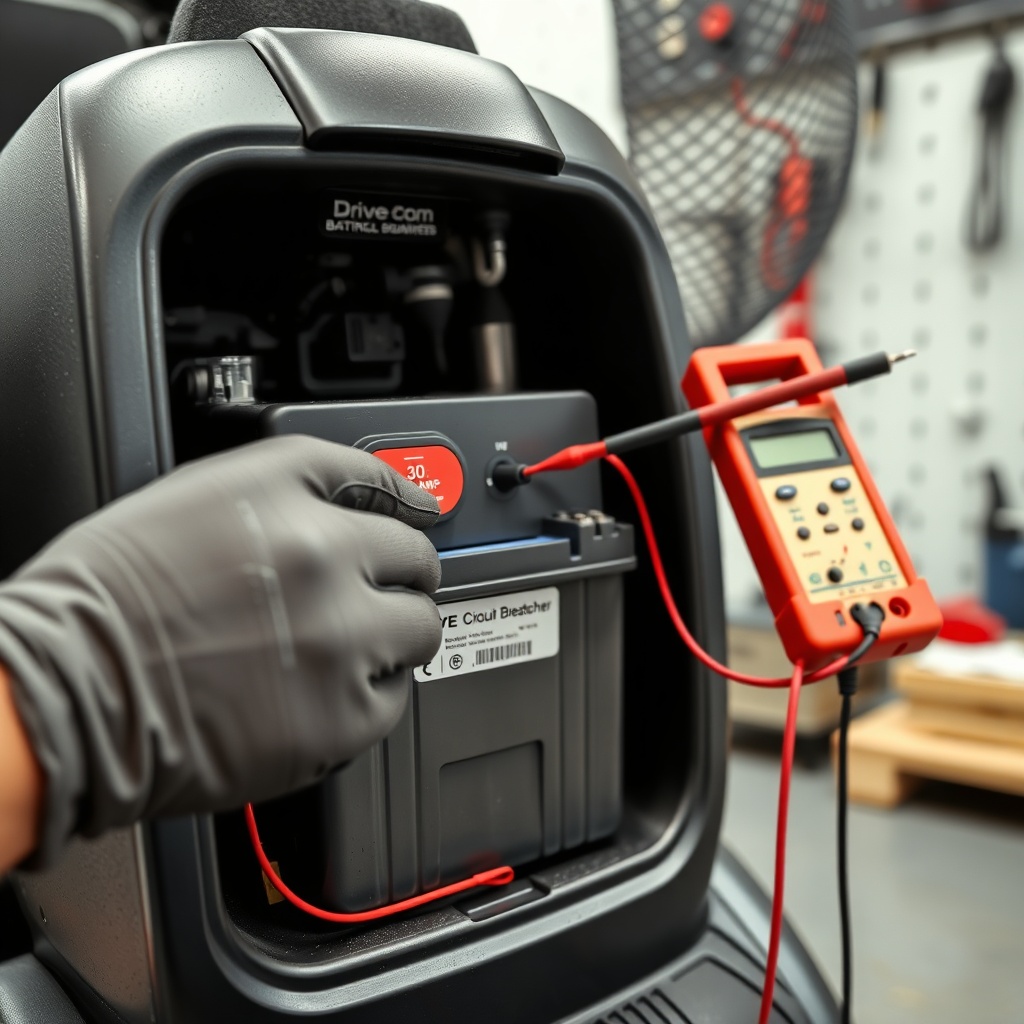
The first thing to check is the battery connection. On the Scout, the main power connector can vibrate loose, especially after riding over uneven pavement. Press the connector firmly until you hear a click. If the scooter still shows no lights or display, look for the 30-amp circuit breaker near the battery compartment—it’s a small red button. Press it to reset. If the breaker trips repeatedly, you may have a short or a battery that’s too far discharged. Test the battery voltage at the charging port with a multimeter: a fully charged battery should read around 24.5–25.2 volts (for a 24V system). Below 21 volts, the battery management system may shut down the scooter to protect the cells.
Another common culprit on the Scout is the ignition key cylinder. Over time, the contacts inside can wear out or corrode. If you turn the key and the dash stays dark, try jiggling the key gently while watching the battery indicator. If that brings the scooter to life, the ignition switch needs replacement—a part that costs about £20–£30 and can be swapped in under 15 minutes.
Battery Terminal Corrosion
White or greenish residue on the battery terminals can also prevent power from flowing. Clean the terminals with a mix of baking soda and water, then apply dielectric grease. On the Scout, the battery box slides out from the rear; remove the two wing nuts to access the terminals.
Why Does My Drive Medical Scout’s Front Tire Wobble or Shimmy?
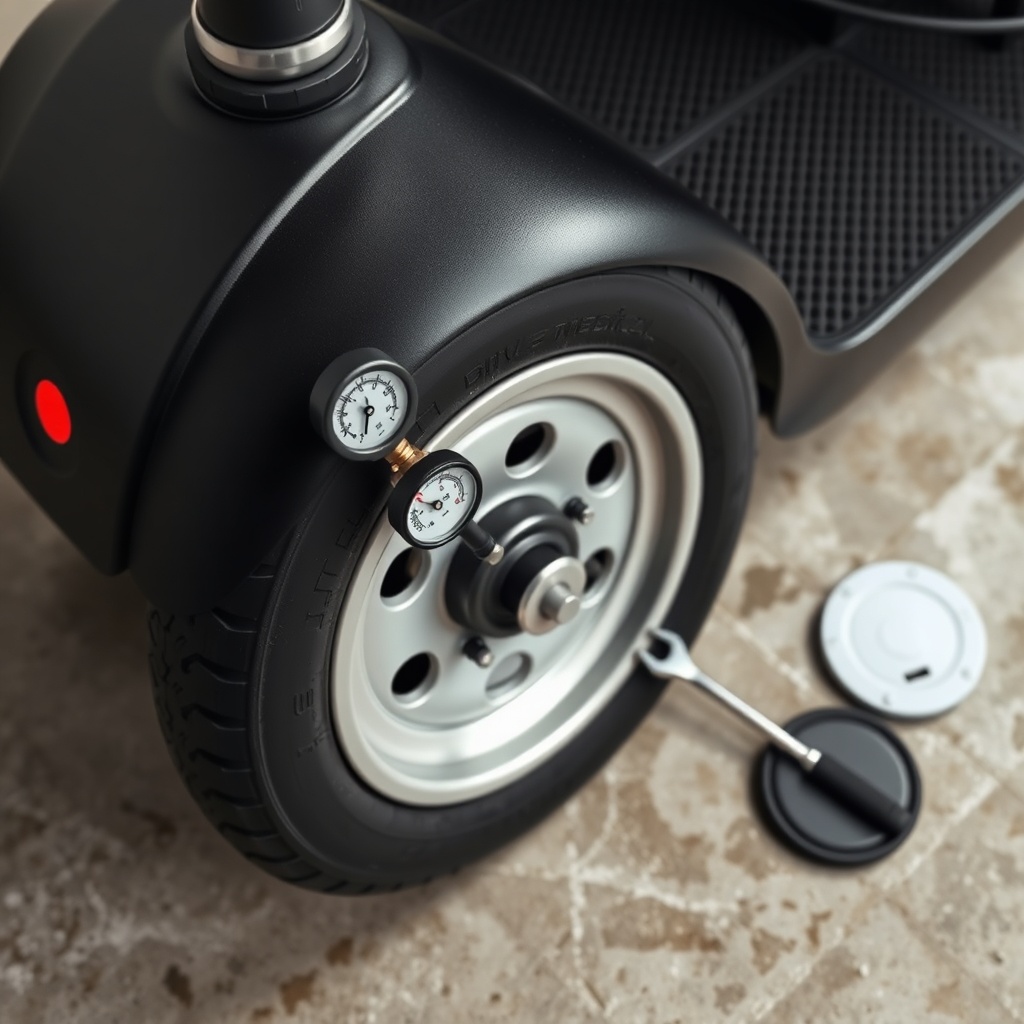
A wobbling front wheel is one of the most reported issues on the Scout. Most of the time, it’s due to low tire pressure. The Scout’s 10-inch pneumatic front tire (rated at 30–35 PSI) can lose pressure gradually, especially if the valve stem is slightly loose. Use a bicycle pump with a pressure gauge to inflate to 32 PSI. If the wobble persists, inspect the tire sidewall for a bulge that indicates a broken belt—this will require a tire replacement (around £35–£50 for a quality tire). Another cause is a loose axle nut. The front wheel is held by a single 15mm nut; if it’s not torqued to 18–20 ft-lbs, the wheel can shift. Tighten it with a wrench and check again.
If both tire pressure and axle are fine, the issue may be in the steering column. The Scout’s tiller (handlebar post) has a pivot bolt that can loosen over time. Locate the Allen bolt at the base of the tiller (under a plastic cover) and tighten it to 22 ft-lbs. A wobble that persists after this points to worn headset bearings—a repair best left to a mobility shop, but you can check by lifting the front of the scooter and feeling for any play in the fork.
Drive Medical Scout Keeps Tripping the Circuit Breaker – What Now?
If your Scout’s circuit breaker trips every time you try to accelerate or climb a small incline, the problem is almost certainly an excessive current draw. Start by checking the motor brushes. On the Scout, the rear drive motor has two brush caps (one on each side). Remove them with a flathead screwdriver and inspect the carbon brushes—if they are shorter than 5mm, replace them. A set of brushes costs about £12 and is a 20-minute job. Another common cause is a seized bearing in the rear wheel. If the wheel doesn’t spin freely by hand, the bearing is likely corroded. You’ll hear a grinding sound when moving. Replacing the rear wheel assembly (bearing included) is the easiest fix—about £45–£60 and requires only a 17mm socket.
If the breaker trips with no load (scooter on a stand, wheels in the air), the issue is in the controller or wiring. Check the main power cable for any visible fraying or pinched spots, especially where it passes under the seat. A shorted controller will need professional diagnosis, but a visual check can save a service call.
How to Check and Adjust Tires on the Drive Medical Scout
Proper tire maintenance on the Scout is simple but vital. The rear tires are slightly larger than the front (12 inches vs 10 inches) but both are pneumatic and require the same pressure range (30–35 PSI). Use a quality tire gauge—many owners find that the built-in pressure indicators on cheap pumps are inaccurate. Inflate to 32 PSI for a good balance of comfort and efficiency. Underinflated tires cause increased rolling resistance, which drains the battery faster and can make the scooter feel sluggish.
Tire Tread Depth Check
Look for wear indicators (small bars molded into the tread) on the side of the tire. If the tread is flush with those bars, the tire needs replacing. On the Scout, the front tire typically wears out twice as fast as the rears due to steering load and weight transfer during turning.
If you have a flat tire, you can patch a pneumatic tube (the Scout uses separate inner tubes). A patch kit costs £5–£8 and takes about 30 minutes. However, many owners prefer to replace the entire tire and tube for about £30, since removing the rear wheel requires loosening the mudguard bracket.
Drive Medical Scout Battery Won’t Charge – Troubleshooting Steps
When the battery doesn’t charge, start by checking the charger. The Scout’s standard charger outputs 24V at 2A. Plug it into a known working wall outlet and see if the green light turns red (or stays off). If the charger shows no light, the charger itself may be faulty. A replacement charger costs about £40–£55. If the charger lights up but the battery never reaches full charge (green light never appears within 8–10 hours), the battery likely has a dead cell. On the Scout, the two 12V 12Ah batteries (sealed lead-acid) are wired in series. You can test each individually with a multimeter: if one shows less than 10.5V while the other is 12.8V, replace both batteries (never mix old and new). A pair of quality replacement batteries runs about £70–£90.
A less obvious problem is a loose charge port. The Scout’s charge port is located on the tiller and can develop intermittent contact. If you wiggle the charger plug and the red light flickers, the port needs replacing—a £10 part that requires soldering or crimping.
Battery Capacity Loss Over Time
Even if the battery appears to charge, its capacity may have degraded. A typical 12Ah battery on the Scout will deliver about 10–12 miles when new. After two years of regular use, that range can drop by 30–40%. If you’re only getting 6–7 miles, it’s time for new batteries. Always charge the batteries immediately after each use, and avoid letting them discharge fully—that can irreversibly damage the cells.
Drive Medical Scout Rear Wheel Won’t Spin Freely – Possible Causes
A binding rear wheel is often caused by debris or a bent brake lever. The Scout’s rear drum brake can get stuck if the brake cable is too tight. Adjust the cable by loosening the locknut at the brake arm and turning the adjusting barrel—you want about 1–2mm of free play before the brake engages. If the wheel still doesn’t spin freely, check the axle nut (30 ft-lbs torque) and ensure the parking brake lever (located on the tiller) is not engaged. Sometimes, a piece of gravel or mud gets lodged between the brake drum and the wheel hub. Remove the wheel (three bolts on the hub) and clean the area.
If the wheel spins freely when lifted but drags under load, the issue is almost certainly a worn motor bearing. This manifests as a rough, grumbling noise when riding. Bearing replacement requires special tools—most owners opt to replace the entire motor-gearbox unit for about £120–£150.
| Severity | Description | Example on Drive Medical Scout |
|---|---|---|
| Usually Not Urgent | Can be fixed at home in under 30 minutes with basic tools. No safety risk if ignored for a few days. | Loose battery connector, low tire pressure (top up to 32 PSI), dirty charge port contacts. |
| Needs Attention Soon | May affect ride quality or cause further damage. Should be addressed within a week. Can be a safety hazard when ignored. | Tripping circuit breaker (check brushes), front tire wobble (tighten axle), rear wheel binding (adjust brake cable). |
What Owners Say About Drive Medical Scout Electrical and Tire Issues
“I’ve had my Scout for three years and the only electrical issue I ever had was a loose connector. Took me two minutes to fix—just pushed it in until it clicked. The tires hold air well, but I check the pressure every month now because I learned the hard way that underinflated tires drain the battery faster.” — Robert, retired teacher
“My Scout kept tripping the breaker going up my driveway. I checked the motor brushes like the manual says, and they were almost gone. Replaced them for £12 and it’s been perfect for another year. Wish the battery lasted longer, but for the price it’s fine.” — Maria, part-time caregiver
Frequently Asked Questions
Why does my Drive Medical Scout lose power going uphill?
This is usually a sign of low battery voltage or a failing battery. The motor draws maximum current on inclines, and the battery voltage can sag below the controller’s cutoff. Check battery voltage at rest (should be above 24V) and after a ride (above 22V). If the voltage drops more than 3V under load, the battery needs replacement.
Can I replace the Drive Medical Scout’s tires with solid (puncture-proof) tires?
Yes, but solid tires will make the ride noticeably harsher and reduce traction, especially on wet surfaces. They also add weight. Most owners stick with pneumatic tires because they provide better shock absorption and handling. If you do switch, use a tire that matches the stock dimensions (10×3 for front, 12×3 for rear).
How often should I replace the Drive Medical Scout’s motor brushes?
Inspect them every 12 months or 300 miles of use, whichever comes first. Replace them if they are worn to less than 5mm. If you notice a sudden loss of power or the scooter stutters when starting, check the brushes first—they are a common wear item and cost very little.
What should I do if my Drive Medical Scout’s charger gets warm?
A slight warmth is normal during charging. If it becomes too hot to touch (over 50°C), stop charging immediately and replace the charger. Overheating can damage the battery and create a fire risk. Always use the charger that came with the scooter—using an incompatible charger may damage the battery or controller.
Why does my Drive Medical Scout’s front tire make a thumping noise?
A rhythmic thumping usually means the tire has a flat spot or a bulging sidewall. Inflate the tire to the correct pressure first—if the noise persists, inspect the tread for uneven wear. Replace the tire if you see any bumps or cuts deeper than 2mm.
Is it normal for the Drive Medical Scout’s battery to drain quickly in cold weather?
Yes. Sealed lead-acid batteries lose about 20–30% of their capacity at 0°C (32°F). If you ride in cold conditions, expect a reduced range. Store the scooter in a warm environment (above 10°C) when not in use. Lithium-ion upgrades are available but require a compatible charger and controller.
For a deeper look at the overall build and durability of the Scout, check our Drive Medical Scout Design Analysis: Frame Durability and Weight article. To learn about optimal charging routines and real-world range, read our Drive Medical Scout Battery Performance Review: Charging Time and Range. If you’re also dealing with steering or brake issues, our troubleshooting hub covers all major systems.