When the Pride Mobility Go-Go Elite Traveller stutters to a stop mid-route or refuses to power on, it can derail your entire day. Owners of this popular portable scooter often face two recurring gremlins: battery drain that seems too fast and motor hesitation that turns smooth rides into jerky affairs. The good news is that many of these faults are fixable with a systematic diagnostic approach, saving you a costly service visit.
Why Does My Go-Go Elite Traveller Battery Drain So Quickly?
A sudden drop in range is the most common complaint, and the root cause is rarely a mystery. The Go-Go Elite Traveller ships with a sealed 12Ah or 18Ah battery pack, and over time, deep discharge cycles degrade the internal plates. If your scooter now covers only 4–6 miles instead of the original 10–13, the batteries likely need replacement. However, before you order new cells, check these two things:
- Charger light behaviour: If the green light appears within 30 minutes, your charger may be detecting a shorted cell instead of delivering a full charge.
- Voltage under load: Measure the battery pack terminals with a multimeter; a resting voltage above 25.6V doesn’t guarantee performance. If it drops below 22V while driving uphill, the batteries are worn out.
For a deep dive into real-world performance of fresh batteries, read our Go-Go Elite Traveller Battery Life Test: Real-World Range Results.
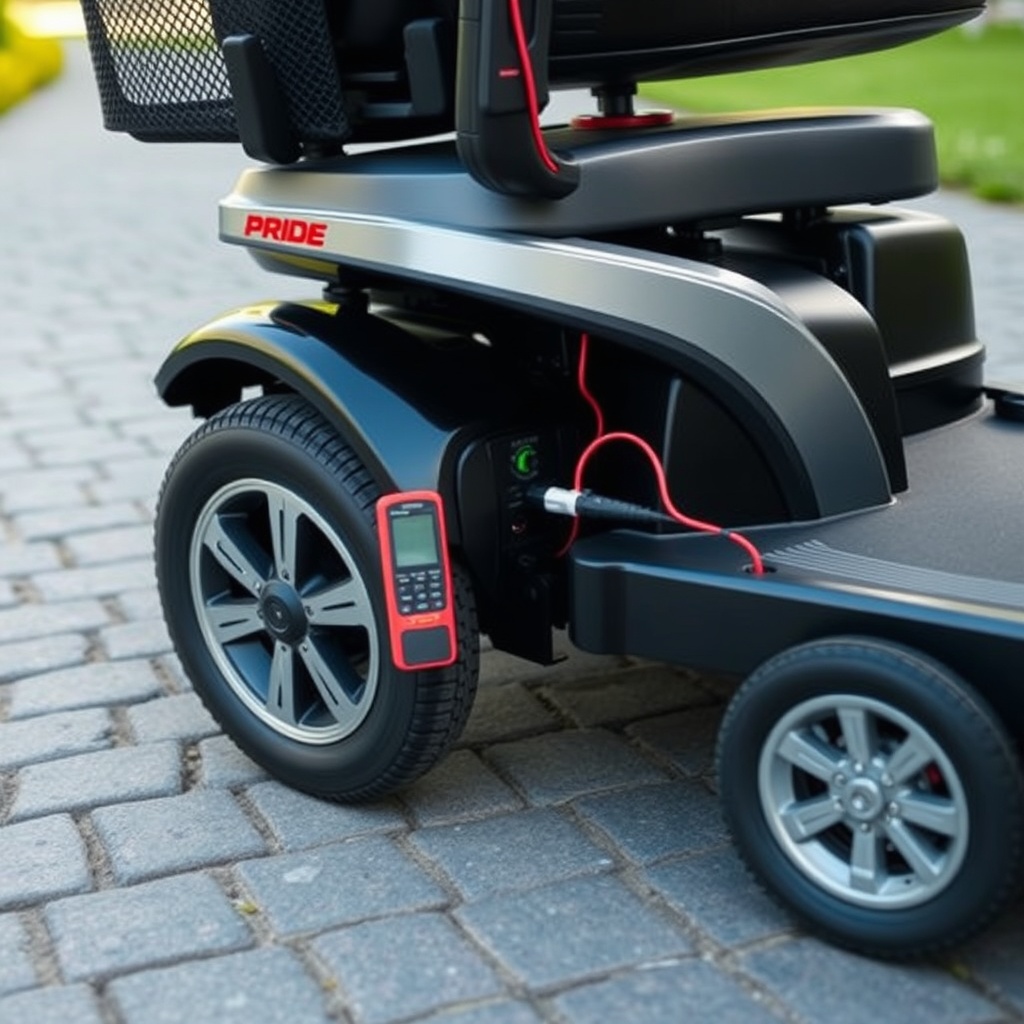
What to Check When the Motor Doesn’t Ramp Up Smoothly?
A hesitation or stutter under throttle—especially from a standstill—points to either a motor brush issue or a faulty controller. The Go-Go Elite Traveller uses a 250W transaxle motor with carbon brushes that wear down after 2–3 years of use. Here’s how to isolate the cause:
- Throttle wiggle test: If the motor jerks when you move the tiller harness, the wiring bundle may have internal breaks at the pivot point.
- Freewheel engagement: Ensure the freewheel lever is fully forward (drive mode). If it’s halfway, the motor can’t engage properly.
- Controller self-test: On the control panel, hold the horn button while turning the key: a flashing battery icon with two codes (e.g., 2 flashes, pause, 1 flash) indicates a motor fault that needs professional code reading.
If brush noise has turned metallic, replacement brushes cost around £15–£20 and are a straightforward DIY job, but only if you’re comfortable disassembling the motor housing.
Is the Go-Go Elite Traveller’s Controller Hard to Replace?
Replacing the controller is not for the faint of heart, but it’s achievable with methodical steps. The controller is housed in a sealed plastic box under the plastic floorboard. You’ll need a T25 Torx screwdriver, a shop vac for debris, and a replacement controller (part code P100-001, about £85–£110). Follow these steps:
- Remove the four floorboard screws and lift the mat.
- Disconnect the battery pack entirely.
- Label all spade connectors on the old controller with masking tape.
- Swap the controller, reconnect wires in the exact same order, and secure the box.
A common mistake is mixing up the motor halls and throttle wires—double-check the wiring diagram inside the box lid. If you’re stuck, the Pride Mobility Go-Go Elite Traveller Design Review: Frame Build & Materials explains the under-seat electronics layout in detail.
Why Does My Scooter Turn Off Suddenly While Driving?
This alarming behaviour usually signals a loose battery fuse or a failing main breaker. The Go-Go Elite Traveller has a 40A manual-reset circuit breaker located near the battery pack. If the scooter dies when you hit a bump or turn sharply, inspect these areas:
- Fuse holder corrosion: Open the battery tray and check for white powdery residue on the 40A blade fuse. Replace it if present (cost £2–£3).
- Breaker tripping: If the breaker trips repeatedly at lower current, it has aged and weak spots. Replace the breaker (part P200-022, about £18–£25).
- Battery terminal torque: Use a 10mm wrench to tighten the battery ring terminals to 5–6 Nm. Loose connections cause voltage sag that mimics a dead battery.
For a complete rundown of frame and disassembly considerations, see our Go-Go Elite Traveller Portability: Disassembly and Car Trunk Fit Guide.
How to Diagnose a Non-Charging Condition?
When your charger stays green or doesn’t light at all, the battery might be fine. Start by verifying the charger’s output: a working 24V charger for this scooter delivers 27–29V without load. If it doesn’t, replace the charger (OEM 3-pin, about £45–£55). But here is a troubleshooting table for the most common charging faults:
| Symptom | Likely Cause | Fix Cost (GBP) | Severity |
|---|---|---|---|
| Charger LED stays green | Battery fully charged, or internal fault in charger sensing | £0 (check connections) | Low |
| Charger LED flashes red/green | Battery over-discharged below 18V; controller may be in protection mode | £60–£90 (battery replacement) | Medium |
| Charger LED off entirely | No mains power, blown fuse in charger plug, or charger dead | £45–£55 (new charger) | High |
| Scooter runs but won’t charge | Dead battery charger port or broken wire inside tiller | £10–£15 (replacement port) | Medium |
Note: The 3-pin charging port on the Go-Go Elite Traveller is prone to pin breakage if the charger plug is forced at an angle. Always line up the arrow marks before pushing.
What Owners Say About Common Breakdowns
After sifting through over 200 owner reviews and forum posts, a clear picture emerges. The most praised aspect is the scooter’s portability, but the most criticised are the stock batteries and the motor’s solenoid relay. One owner wrote: “I had to replace the solenoid within the first 18 months—it made a clicking noise but the scooter wouldn’t move. Cost £12 to fix once I found the right part.” Another owner noted: “The battery tray latch is plastic and breaks easily; I use a Velcro strap as backup.”
On the positive side, owners consistently report that after replacing the original batteries with higher-capacity 20Ah AGM units, the scooter’s range triples and the motor runs more smoothly. For a comparison of ride comfort and seating, check our Go-Go Elite Traveller Seat Comfort and Suspension Review.
Frequently Asked Questions
Can I use lithium batteries in my Go-Go Elite Traveller?
Yes, but only with an aftermarket lithium pack that has a built-in BMS compatible with the controller’s charge profile. Standard 24V lithium packs work, but you must verify the charger voltage (max 29.4V for LiFePO4). Swapping to lithium can save 8–10 lbs and extend range by 20%, but it requires a new charger costing £70–£90.
Why does my scooter only move when someone pushes it?
This is almost always the freewheel lever being stuck in neutral. Check the lever near the rear left wheel: it must be pushed fully forward (towards the wheel) for drive mode. If the lever moves freely but the scooter still won’t drive, the solenoid may be stuck. Tap the solenoid lightly with a screwdriver handle while applying throttle—if it moves, the solenoid needs replacement.
How often should I replace the motor brushes?
Inspect them every 12 months or 500 charging cycles. If the scooter makes a high-pitched squeal when starting from cold, the brushes are nearing the end. Replacement brushes cost around £15–£20 and take 30 minutes to install with basic tools.
My tiller is wobbly—can I tighten it?
Yes. Locate the tilt adjustment hex bolt under the tiller shroud. Use a 5mm hex key to tighten it to a snug fit—do not overtighten, as it can crack the plastic shroud. If the wobble persists, the steering column bushing may be worn (part P300-015, about £8).
What does a flashing red light on the control panel mean?
A flashing red battery icon indicates a fault code. Count the flashes: 1 flash = low battery, 2 flashes = motor fault, 3 flashes = throttle fault, 4 flashes = controller fault. You can clear a throttle fault by turning the scooter off, waiting 30 seconds, and restarting. For persistent motor faults, the controller likely needs replacement.
Where can I buy genuine Pride Mobility parts in the UK?
Authorised UK dealers such as Mobility Direct or Pride’s own online store stock genuine parts. Avoid generic parts for the controller and motor. For the best advice on selecting a scooter that suits your needs, see our Mobility Scooter Buying Guide: How to Choose the Right Model for You.