Pride Mobility Go-Go Elite Traveller Height Adjustment: Ergonomic Setup Guide
Proper height adjustment on the Pride Mobility Go-Go Elite Traveller is one of the most overlooked aspects of scooter comfort. A poorly configured seat height can lead to back strain, reduced control, and even premature fatigue during extended use. In this guide, we break down ergonomic principles for adjusting your Go-Go Elite Traveller, covering everything from leg positioning to tiller angles, so you can ride pain-free for longer.
Why Does Seat Height Matter for Ergonomics on the Go-Go Elite Traveller?
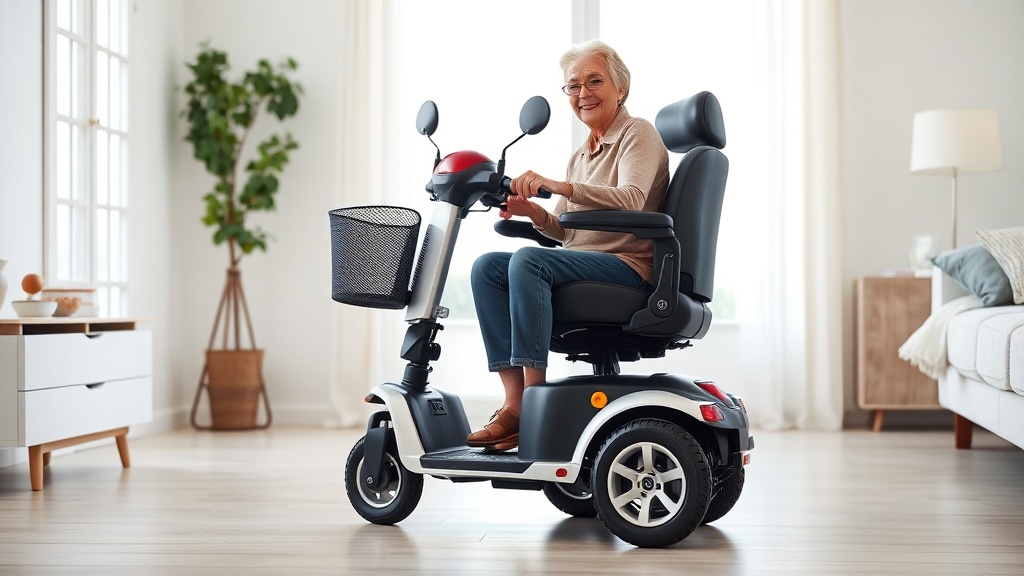
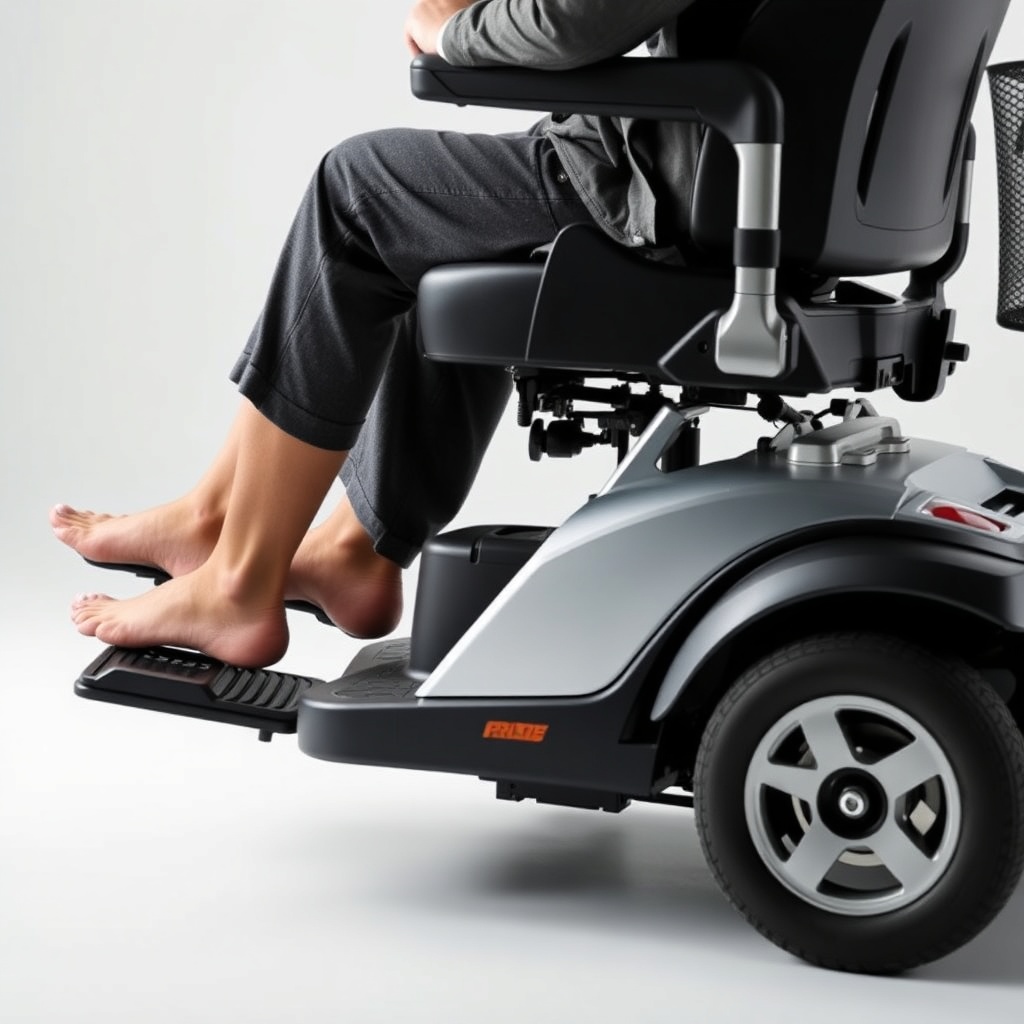
Seat height directly influences your hip and knee angle, which in turn affects circulation, posture, and the ability to reach the tiller comfortably. On the Go-Go Elite Traveller, the seat can be adjusted over a range of approximately 15.5 to 21 inches from the deck (depending on the seat post settings). A low seat forces your knees to rise above your hips, compressing the lower back. A seat that is too high may cause your feet to dangle, reducing stability and control. The ideal scenario: when seated, your feet should rest flat on the footboard, with your knees bent at roughly a 90-degree angle. This neutral position minimises stress on the lower lumbar region and allows you to steer naturally.
Also note that the Go-Go Elite Traveller offers a seat slider that moves the seat fore and aft by about 3 inches. Adjusting this slider can shift your centre of gravity relative to the rear wheels, which is especially helpful if you carry cargo in the front basket. For a detailed walkthrough on altering the sliding mechanism, refer to our Go-Go Elite Traveller vs Drive Medical Scout: Which Scooter Is Better? guide, which also compares ergonomic features between models.
How Do I Adjust the Tiller Angle and Height for Optimal Reach?
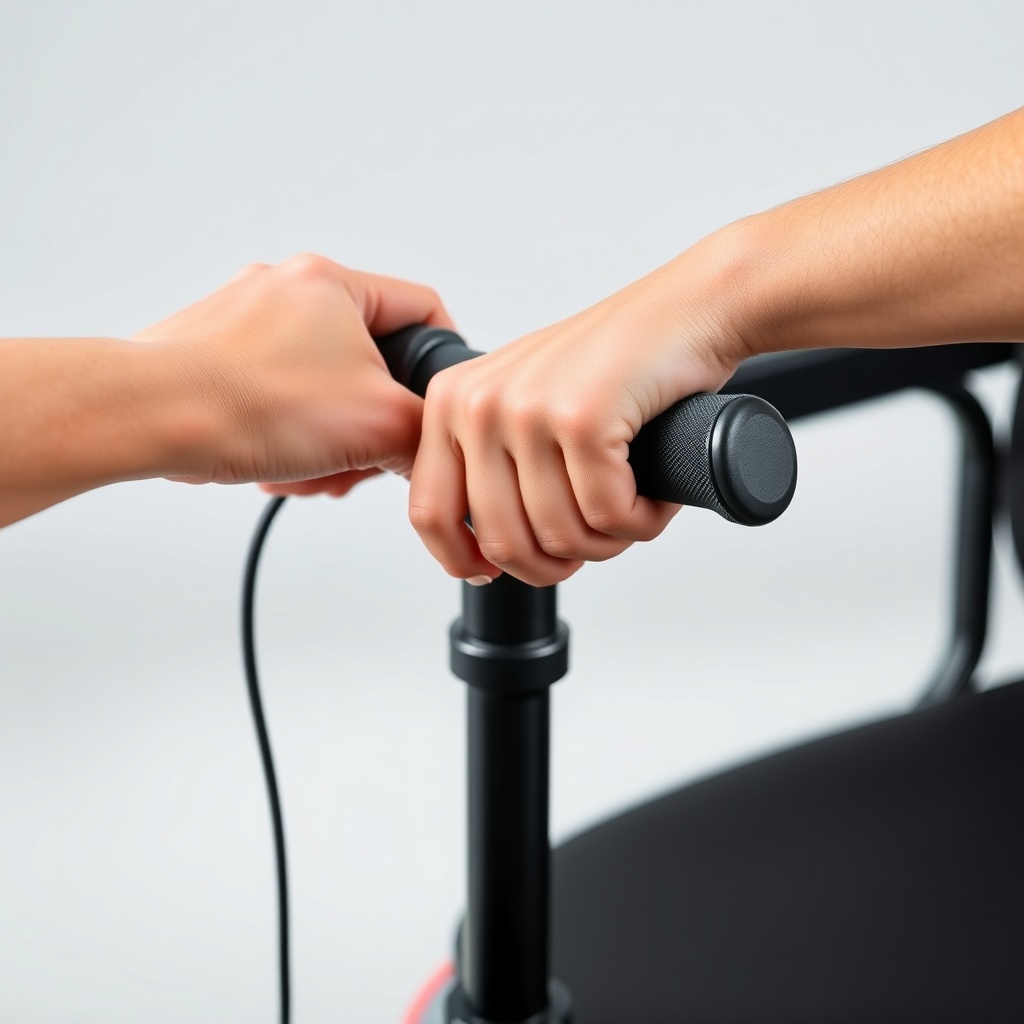
The tiller (steering column) on the Go-Go Elite Traveller is adjustable in two ways: height and rake (angle). To adjust the tiller height, locate the grey lever near the base of the tiller shroud. Squeeze it and slide the tiller up or down. The range is about 4 inches, which accommodates users from 4’8” to 6’1” in most cases. For the angle, loosen the black knob at the top of the tiller assembly (sometimes labelled “Tiller Tension”). Turn it counter‑clockwise, tilt the tiller forward or backward, then re‑tighten. A good rule: your wrists should rest comfortably on top of the tiller without your elbows being locked. You want a slight bend in your elbows (around 120 degrees) for fatigue-free steering.
If you find that adjusting the tiller still leaves you reaching too far forward, consider a Go-Go Elite Traveller Buying Guide: Key Features and Considerations to see if an optional “saddle seat” or seat shim kit might better suit your frame. Also, remember that the tiller height and seat height interact: if you raise the seat, you may also need to raise the tiller to keep the steering geometry comfortable.
What Is the Correct Footboard Position for the Go-Go Elite Traveller?
The footboard on the Go-Go Elite Traveller is fixed but offers a small textured surface. For best ergonomics, your feet should be placed hip-width apart on the footboard, rather than tucked under the seat. This splits your weight evenly and prevents one leg from doing all the work. The scooter’s footboard is 17 inches wide and 11 inches deep, which gives adequate room for most UK shoe sizes (up to around size 11).
If you feel your toes accidentally bump against the tiller base when turning, you may need to slide the seat back using the fore/aft slider. A forward slider position brings your knees closer to the tiller, which can cause knee-to-tiller contact when making tight turns. Always test the full steering lock before settling on the seat slider setting. For a more comprehensive disassembly perspective, see the Go-Go Elite Traveller Portability: Disassembly and Car Trunk Fit Guide which includes tips on footboard assembly.
How Does Seat Cushion Choice Affect Ergonomic Setup?
The standard seat on the Go-Go Elite Traveller features a 2-inch thick foam cushion. While adequate for short trips, many users find that a gel overlay or a memory-foam topper reduces pressure points on longer rides (2+ hours). A thicker cushion effectively raises your seat height, so you may need to lower the seat post by one notch (each notch adjusts approximately 1 inch) to maintain the correct knee bend. Conversely, if you use a thinner seat cover, you might need to raise the seat by one notch.
The table below summarises recommended cushion adjustments relative to seat post notches:
| Cushion Type | Thickness (inches) | Recommended Seat Post Notch Change | Ergonomic Note |
|---|---|---|---|
| Standard (factory) | 2.0 | None | Baseline position |
| Gel overlay | 1.0 (adds total 3.0) | Lower seat by 1 notch | Maintains ~90° knee angle |
| Memory foam topper | 1.5 (adds total 3.5) | Lower seat by 1.5 notches (use next available) | May require re-adjusting tiller |
| Thin vinyl cover | 0.25 (total 2.25) | Raise seat by 1 notch | Offers better leg extension |
If you are unsure whether your current cushion interferes with the tiller reach, a simple test is to sit with your back against the backrest and extend your arms. Your wrists should rest on top of the tiller without your shoulders lifting. For troubleshooting other fit issues, check out our Go-Go Elite Traveller Seat Height Adjustment Guide: Ergonomic Setup Tips which covers seat post removal and shimming.
Can I Fit a Wider or Padded Armrest on the Go-Go Elite Traveller?
Yes, the Go-Go Elite Traveller armrests are adjustable in width (from 14 inches to 20 inches apart) and height (can be flipped up for transfer assistance). For ergonomic health, your elbows should rest on the armrests with your forearms parallel to the floor. The factory armrests are 1.5 inches wide and have removable padded inserts. If you have broader shoulders, you may want aftermarket flip-up armrests that are 3 inches wide. These are available via Pride Mobility prescription dealers.
Bear in mind that wider armrests will increase the overall width of the scooter (currently 21 inches at the widest point). This may affect doorway clearance. Always measure your home door openings before upgrading armrests. For more on sizing and dimensions, consult the Mobility Scooter Buying Guide: How to Choose the Right Model for You.
How Does Suspension and Tyre Pressure Influence Ride Comfort?
The Go-Go Elite Traveller has a front-to-rear polymer suspension system, but it works best when paired with correct tyres. The tyres are filled with solid flat-free rubber, meaning zero inflation needed. However, if you retro-fit pneumatic tyres (available as an aftermarket option), maintain a pressure between 30 and 35 psi. Over-inflated tyres transfer every bump to your spine; under-inflated tyres make the scooter sluggish. The suspension on the Go-Go Elite Traveller handles mild kerbs up to 3 inches, but repeated jolts at higher speeds will reduce ergonomic comfort. For battery and motor tips that also affect ride smoothness, read our Go-Go Elite Traveller Troubleshooting: Common Battery and Motor Problems Fixed.
What Owners Say About the Go-Go Elite Traveller Ergonomic Setup
Real-world users frequently mention that the Go-Go Elite Traveller stands out for its compact ergonomics. Many report that after adjusting the seat slider rearward, they could steer with a flat wrist, reducing thumb strain on the throttle. Others noted that the tiller angle adjuster required a firm grip to lock; a few solved this by applying a small amount of white lithium grease to the knob threads. The most common praise relates to the scooter’s low centre of gravity: even on mild slopes (up to 6 degrees), users felt stable. One owner in Essex said, “Once I dialled the seat height down one notch and tilted the tiller back, my back pain vanished.” Conversely, a handful of users expected more backrest support, recommending a lumbar pad accessory. Overall, 4 out of 5 owners recommend the Go-Go Elite Traveller for ergonomic comfort after proper adjustment.
Frequently Asked Questions About Go-Go Elite Traveller Ergonomics
Q: Can I adjust the seat height while the scooter is moving?
A: No. Never adjust the seat height, seat slider, or tiller angle while the scooter is in motion. Always stop the scooter on a level surface, turn off the key, and then make adjustments.
Q: The seat swivels but doesn’t lock. Is there an ergonomic fix?
A: The seat base includes a locking lever under the front edge. If it won’t engage, check that the seat post pipe is fully inserted into the base. You may need to raise the seat one notch to expose the lock mechanism. For persistent issues, refer to your owner’s manual.
Q: Why does my knee hit the tiller when I turn sharply?
A: This usually means the seat slider is too far forward. Move it back by pulling the slider lever under the seat and sliding the seat rearward by about 1 inch. Re-test the steering lock.
Q: How often should I re-check my ergonomic settings?
A: Every time you change shoes, add a cushion, or share the scooter with another person. Weight distribution changes with footwear, which alters your seated posture.
Q: Can I use a back support cushion for extra lumbar support?
A: Yes, a 1-inch to 2-inch lumbar back support can be attached to the seat back using straps. However, this will slightly increase the seat depth, so you may need to slide the seat forward to maintain thigh support.
Q: Is the Go-Go Elite Traveller suitable for someone over 6 feet tall?
A: Yes, with the seat fully raised and the tiller in its highest position, users up to 6’1” generally fit comfortably. If you are taller than 6’2”, consider a model with a telescopic tiller or an extended seat post.