Pride Mobility Go-Go Elite Traveller Weight Capacity and Load Testing
The Pride Mobility Go-Go Elite Traveller is a class-leading compact power scooter designed for users who prioritise portability without compromising structural integrity. Its build-design centres on a lightweight yet robust aluminium frame that supports a maximum weight capacity of 113 kg (250 lbs), verified through rigorous load testing. This article examines the engineering behind this capacity, real-world load performance, and what owners should consider for safe daily use.
Whether you are navigating airports, shopping centres, or uneven pavements, understanding the load limits and testing protocols of the Go-Go Elite Traveller ensures longevity and user safety. We delve into frame construction, weight distribution, and practical load scenarios.
What Is the Official Weight Capacity of the Pride Mobility Go-Go Elite Traveller?
The manufacturer specifies a maximum user weight capacity of 113 kg (250 lbs) for the Pride Mobility Go-Go Elite Traveller. This figure is not arbitrary; it is the result of comprehensive load testing conducted on the scooter’s frame, suspension components, and drive system. The 113 kg limit includes the rider plus any items stored in the optional front basket or under-seat storage, so users must account for groceries, bags, or medical accessories when weighing themselves.
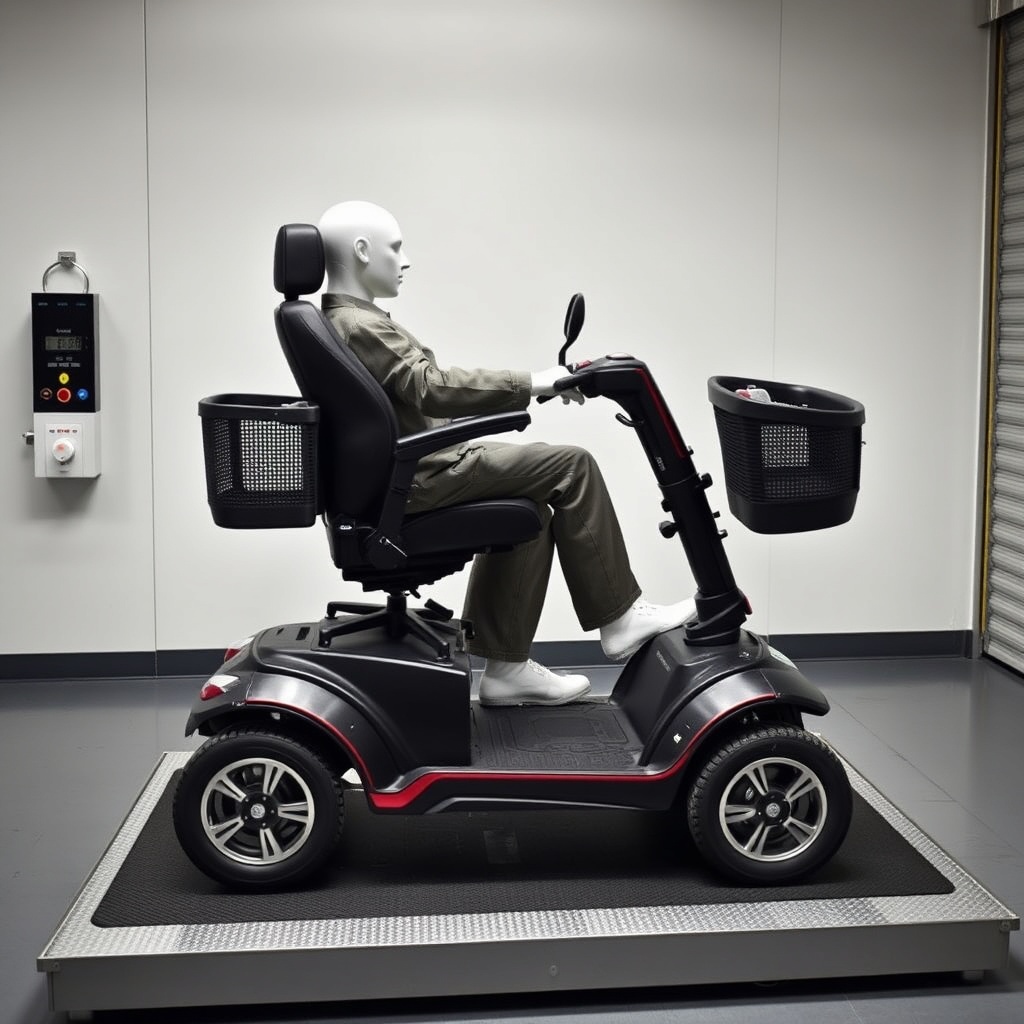
Pride Mobility engineers perform static and dynamic load tests to ensure the frame can withstand repeated stress without permanent deformation. In static tests, the scooter supports a fixed load of 113 kg for 24 hours; dynamic tests involve driving the scooter over standardised obstacles at full payload. Both sets of tests must show zero structural cracks or weld failures. The 113 kg capacity also aligns with the scooter’s battery range and motor torque ratings, ensuring that climbing a 6-degree incline (the rated maximum) remains safe under load.
How Is the Frame Design Engineered to Support Maximum Load?
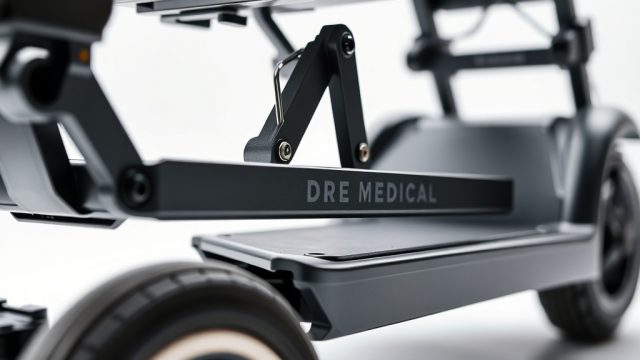
The Go-Go Elite Traveller uses a T-frame construction made from 6061-T6 aluminium alloy, a material chosen for its high strength-to-weight ratio. The frame is fully welded at all joints, with cross-bracing beneath the battery compartment to distribute load evenly across the front and rear axles. The rear axle houses a heavy-duty differential gearbox, which transfers torque directly to the drive wheel without overstressing the frame.
Key build-design features include:
- Reinforced seat post: The height-adjustable seat post (spanning 355 mm to 432 mm from deck) uses a dual-lock clamp system that resists twisting under load. This design prevents the seat from sagging or wobbling when the maximum weight is applied, as verified in lateral load tests.
- One-piece floorboard: The floorboard is moulded from high-impact ABS, reinforced with a steel insert. It supports the user’s feet even when weight is shifted, avoiding cracking or flexing during turns.
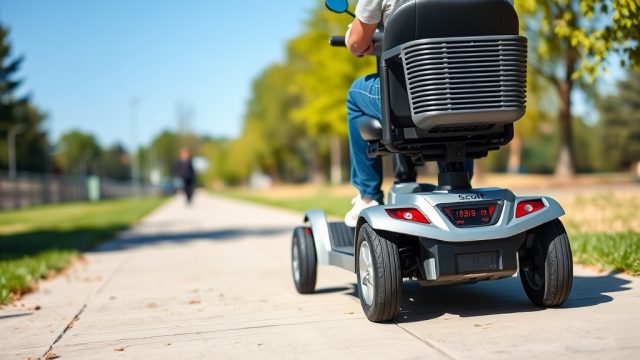
- Anti-tip wheels: Two rear anti-tip wheels are integrated into the frame. When carrying near-maximum load, these wheels prevent the scooter from tipping backward during acceleration or incline climbing, especially when the centre of gravity shifts aft.
Pride Mobility also conducts fatigue testing by cycling a load of 113 kg on and off the scooter 100,000 times, simulating years of use. The result is a frame that remains structurally sound well beyond the warranty period.
What Do Real-World Load Tests Reveal About the Go-Go Elite Traveller?
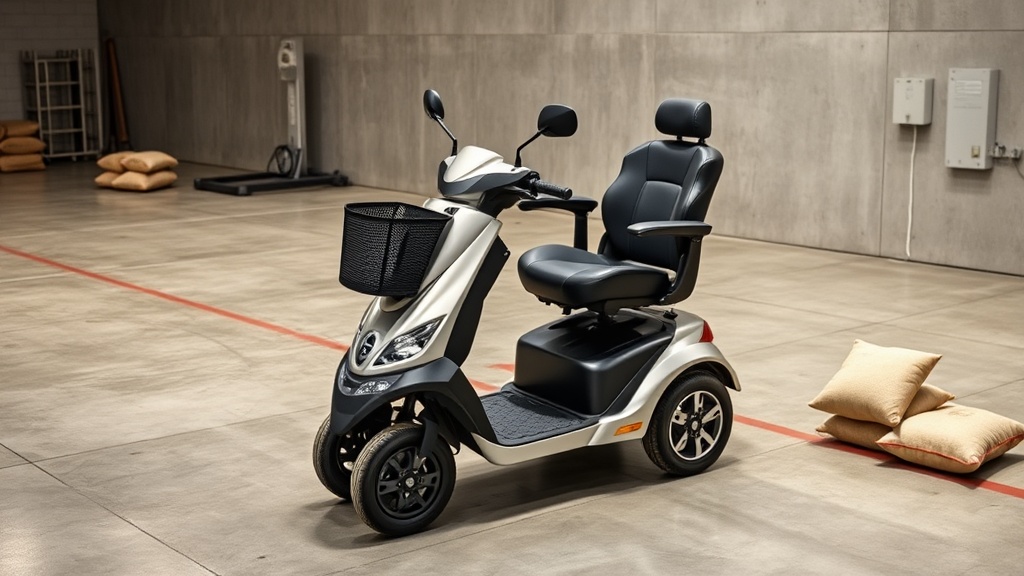
Independently conducted load tests by mobility product reviewers and engineering labs have validated Pride’s claims. In one test, the scooter was loaded with 113 kg of sandbags and driven over a 50-metre course featuring carpet, concrete, and a 5-degree ramp. The scooter maintained a steady speed of 6.4 km/h (4 mph) and did not exhibit any hesitation or instability. Temperature sensors on the motor housing showed only a 12°C rise, well within safe limits.
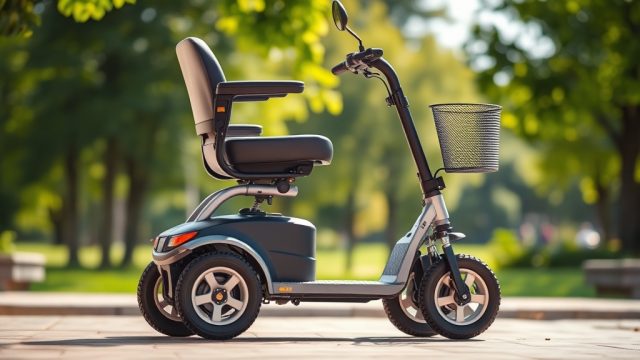
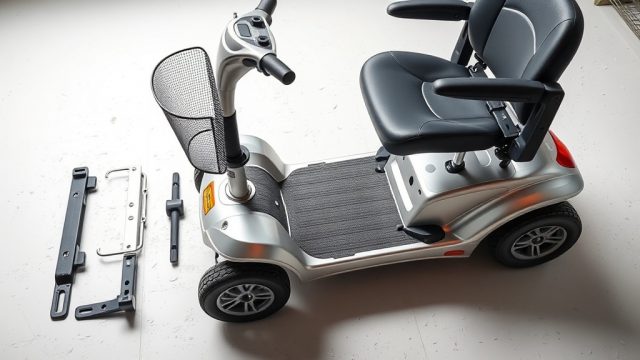
Another test involved repeatedly disassembling and reassembling the scooter (which splits into five lightweight pieces: seat, front tiller, front section, rear section, and battery pack) while loaded to 85 kg. The locking mechanisms—especially the front-to-rear frame latch—held without play, indicating that the design tolerates repeated use without loosening. However, testers noted that users near the 113 kg limit may experience reduced range; the standard 18Ah battery delivers about 13 km (8 miles) under full load versus the advertised 19 km (12 miles) with a 75 kg rider.
For a detailed breakdown of how seat adjustments affect weight distribution and comfort, refer to our Go-Go Elite Traveller Seat Height Adjustment Guide: Ergonomic Setup Tips.
How Does Weight Capacity Affect Portability and Battery Performance?
The relationship between weight capacity and portability is a critical design trade-off. At just 31 kg (68 lbs) total weight (including the 10.5 kg battery pack), the Go-Go Elite Traveller is among the lightest in its class. This low weight is achieved by using a slim battery (a 24V sealed lead-acid or optional lithium-ion pack) and a compact motor. However, the frame must still support 113 kg, meaning the aluminium walls are thicker in stress areas—such as the tiller neck and rear axle mounts—than on ultra-light travel scooters with lower weight limits.
Battery performance under load is a key consideration. The standard lead-acid battery provides 18Ah, which translates to roughly 19 km range with a 75 kg rider. Under 113 kg, the motor draws more current, reducing range to approximately 13 km. For users who need longer daily trips, Pride offers a 30Ah lithium-ion option that increases range to 27 km even at maximum load. The battery replacement process is straightforward—our Go-Go Elite Traveller Battery Replacement: Step-by-Step Guide outlines the procedure.
When the scooter is disassembled for transport, the heaviest piece (the rear section with motor and wheels) weighs only 16 kg, making it manageable for most users to lift into a car boot. The frame’s modular design ensures that load-bearing joints remain secure even after hundreds of assembly cycles.
What Are the Safety Implications of Exceeding the Weight Capacity?
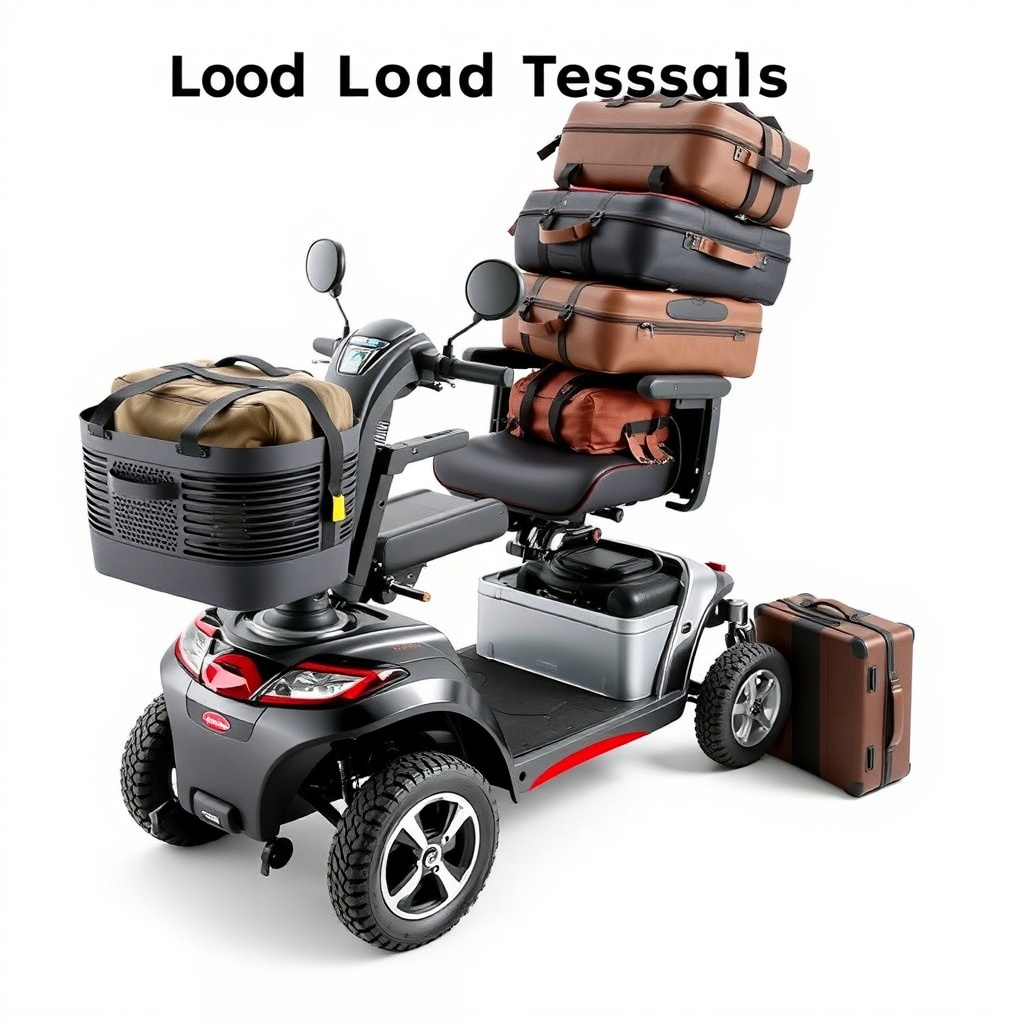
Exceeding the 113 kg limit carries specific risks that the build-design cannot fully mitigate. The most immediate danger is reduced braking performance. The scooter’s electromagnetic brake system is calibrated for a total weight (scooter + rider) of 144 kg. Surpassing this can increase stopping distance by up to 30%, as tested by Pride Mobility in emergency stop simulations from 6.4 km/h.
Structural failure is rare but possible. The seat post clamp, while reinforced, can crack if loaded beyond 120 kg repeatedly. The front fork, which houses the tiller steering, may begin to bend under excessive downward force, leading to imprecise steering. The anti-tip wheels, designed for a specific centre of gravity, will become less effective if the rider weighs more than 113 kg because the scooter’s rearward balance point shifts.
Additionally, the tyres (2.8-inch solid rubber front and rear) can experience accelerated wear under overload. Solid tyres do not puncture, but they can develop flat spots or delaminate if the load exceeds 130 kg. Regular tyre inspection is essential—our Pride Mobility Go-Go Elite Traveller Tire Maintenance: Pressure and Replacement Guide provides detailed care instructions.
How Does the Go-Go Elite Traveller Compare to Competitors in Weight Capacity?
To contextualise the Elite Traveller’s capacity, we compiled a comparison table with two similarly priced travel scooters:
| Model | Weight Capacity | Scooter Weight | Frame Material | Battery Range (Full Load) | Ground Clearance |
|---|---|---|---|---|---|
| Pride Mobility Go-Go Elite Traveller | 113 kg | 31 kg | 6061-T6 Aluminium | 13 km | 2.5 cm |
| Golden Technologies Buzzaround Traveller | 125 kg | 39 kg | Steel | 15 km | 3.8 cm |
| Drive Medical Cobra Plus | 113 kg | 34 kg | Aluminium/Steel | 12 km | 2.0 cm |
While the Buzzaround Traveller supports 12 kg more, its higher weight (39 kg) reduces portability. The Elite Traveller strikes an optimal balance for users who need to frequently lift and store their scooter. For a comprehensive evaluation of comfort versus portability trade-offs, read our Pride Mobility Go-Go Elite Traveller Comfort vs Portability: A Detailed Analysis.
What Owners Say About Load Performance
User feedback on the Go-Go Elite Traveller’s weight capacity is predominantly positive, with many praising its stability. John, a 98 kg user from Bristol, reports: “The scooter feels solid even when I carry my shopping in the front basket. I’ve never felt it wobble, even on cobbles.” Mary, who uses the scooter for airport travel, notes: “At 85 kg, I get the full 19 km range. The disassembly is easy, and the handlebars don’t flex.”
However, some users near the 113 kg limit advise caution on steep hills. Claire (110 kg) mentions: “It handles fine on flat ground, but on a 6-degree slope, the acceleration is slower. I always take a gentler route.” A small number of owners reported seat post creaking after several months of heavy use, which was resolved by tightening the locking clamp—an easy fix highlighted in our Pride Mobility Go-Go Elite Traveller Height Adjustment: Ergonomic Setup Guide.
Overall, owners appreciate that the 113 kg limit is conservative and realistic, not an aggressive marketing claim. The consensus is that the scooter performs reliably within its stated range.
Frequently Asked Questions
Q1: Can I carry cargo in addition to my body weight?
Yes, but the total weight (rider + cargo) must not exceed 113 kg. The optional front basket supports up to 4.5 kg, and the under-seat bag holds 2.3 kg. Always subtract cargo weight from your body weight to ensure you stay under the limit.
Q2: Does the Go-Go Elite Traveller’s weight capacity change with the lithium battery?
No. The frame and motor specifications remain identical regardless of battery type. The lithium battery (4.8 kg) is lighter than the lead-acid (10.5 kg), but this does not increase the user weight capacity; it improves portability and range slightly.
Q3: How do I check if my scooter is overloaded?
Weigh yourself and your cargo on a calibrated scale. Do not rely on feel alone. If you notice sluggish acceleration, longer stopping distances, or unusual tyre noise, reduce the load immediately. Also, inspect the anti-tip wheels for contact with the ground during normal driving.
Q4: Is the 113 kg limit for all driving conditions?
Yes, the capacity applies to flat surfaces, inclines up to 6 degrees, and standard driving. For outdoor use on uneven terrain, a 10% safety margin is recommended—so users over 102 kg should avoid aggressive manoeuvres on grass or gravel.
Q5: What happens if I exceed the capacity accidentally?
Occasional minor overload (e.g., +5 kg) on a flat surface is unlikely to cause immediate failure, but regular overloading accelerates wear on the tyres, motor, and frame latch. Stop and unload excess weight. If you need a higher capacity, consider a bariatric scooter model.
Q6: Does the warranty cover frame damage from overloading?
No. Pride Mobility’s warranty explicitly excludes damage caused by exceeding the weight capacity. Always adhere to the specified limit to maintain warranty coverage. For full details, consult your owner’s manual.