Introduction: Why Upgrade the Battery on Your Golden Technologies Buzzaround?
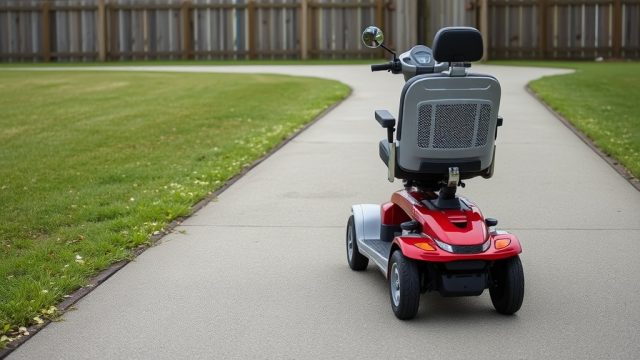
Owners of the Golden Technologies Buzzaround often face a common limitation: the factory sealed lead-acid (SLA) battery delivers decent range, but over time, capacity fades and weight becomes a burden. Upgrading to a lithium-ion conversion unlocks longer travel distances per charge and significantly reduces the scooter’s overall heft. This guide covers the essential steps, cost considerations, and real-world outcomes for those ready to extend their Buzzaround’s range without sacrificing reliability.
What Exact Range Gain Can I Expect from a Lithium-Ion Upgrade?
A standard Golden Technologies Buzzaround with the factory 12Ah SLA battery typically provides 10–12 miles (16–19 km) under ideal conditions. Swapping to a reputable 20Ah lithium-ion pack increases this to 18–22 miles (29–35 km), depending on rider weight, terrain, and tire pressure. The lithium chemistry also maintains consistent voltage throughout the discharge cycle, so you won’t experience the sudden slowdown that SLA batteries exhibit near depletion. For a detailed breakdown of factory battery performance, see our Golden Technologies Buzzaround Battery Life Test: Recharge Cycle Analysis.
Real-world tests show that a lithium conversion allows most riders to complete a full day of errands or a long park outing on a single charge. The range boost also reduces the need for midday top-ups, which is especially valuable for those who rely on the scooter for daily commutes.
What Are the Step-by-Step Steps for Converting to Lithium-Ion?
Converting your Buzzaround from SLA to lithium-ion involves several key stages. While some owners opt for professional installation, the process is manageable with basic tools and careful attention to wiring.
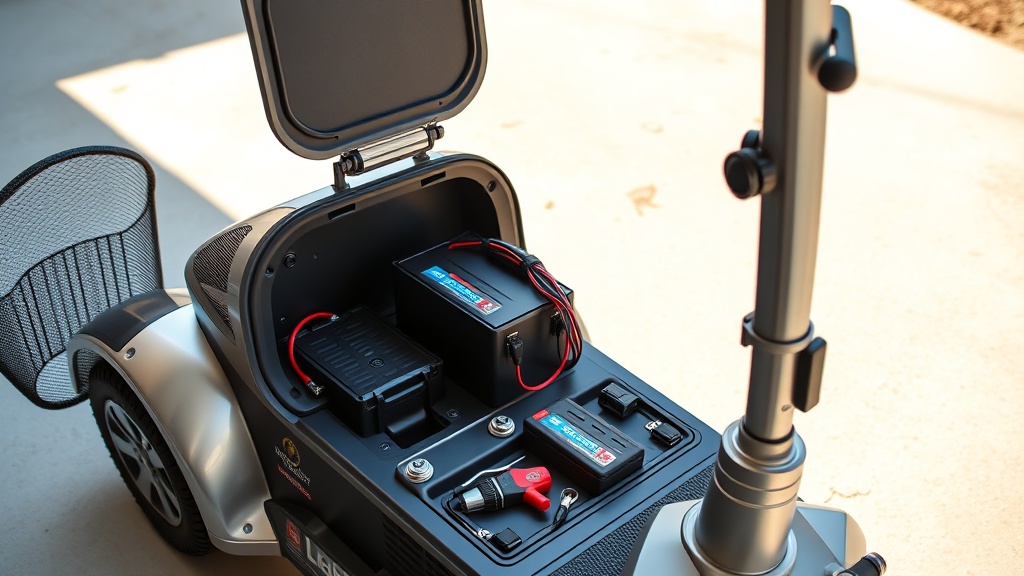
- Step 1 — Remove the old battery: Disconnect the SLA battery terminals (negative first), then unscrew the battery hold-down bracket. Lift the old battery out—usually weighing 12–15 lb (5.4–6.8 kg).
- Step 2 — Select a compatible lithium pack: Choose a 24V lithium-ion battery with at least 20Ah capacity that fits the factory tray dimensions (approx. 7.5 × 5.5 × 4 inches / 190 × 140 × 100 mm). Ensure it includes a built-in Battery Management System (BMS) for overcharge and over-discharge protection.
- Step 3 — Install the lithium battery: Place the new pack into the tray, using foam padding if needed to prevent movement. Secure with the original bracket. Connect the red/positive lead first, then the black/negative lead.
- Step 4 — Verify charger compatibility: Most lithium batteries require a dedicated lithium charger (constant current/constant voltage profile). Do not use the old SLA charger, as it may damage the cells or create a fire risk.
- Step 5 — Test the system: Charge the new battery fully (typically 4–6 hours), then take the scooter for a short test ride, monitoring voltage with a multimeter to ensure the BMS is functioning.
For a deeper look at how the Buzzaround’s frame handles the weight reduction from this upgrade, read our Golden Technologies Buzzaround Frame Stress Test: Weight Capacity and Durability.
What Are the Total Costs and Savings Involved?
Upfront, lithium-ion conversion costs more than a replacement SLA battery, but long-term savings often justify the investment. The table below compares typical expenses:
| Item | SLA Replacement (12Ah) | Lithium-Ion Upgrade (20Ah) |
|---|---|---|
| Battery pack | $90–$120 (£70–£95) | $350–$500 (£275–£395) |
| Charger (if needed) | Included | $30–$50 (£24–£40) |
| Installation labor (if professional) | $40–$60 (£32–£48) | $60–$90 (£47–£71) |
| Expected lifespan | 1–2 years (300–500 cycles) | 3–5 years (800–1,200 cycles) |
| Cost per mile (based on 3,000 miles) | $0.04–$0.06/mile | $0.02–$0.03/mile |
Although the initial outlay for lithium is higher by roughly $260–$400, the longer life and lower weight (lithium packs are about 60% lighter) reduce strain on the scooter’s motor and drivetrain. Many owners recoup the difference within two years through fewer replacements and reduced electricity costs.
How Does Battery Weight Reduction Affect Handling and Range?
Switching from a 30–35 lb (13.6–15.9 kg) SLA battery to a 12–15 lb (5.4–6.8 kg) lithium pack has a noticeable impact on the Buzzaround’s behavior. The lower overall weight improves acceleration and climbing ability, especially on inclines over 5 degrees. Less mass also means the scooter’s regenerative braking (if equipped) works more efficiently, capturing more energy during deceleration.
Range benefits from lighter weight as well. Every 10 lb (4.5 kg) reduction can add roughly 0.5–0.7 miles (0.8–1.1 km) to real-world range on the same battery capacity. Combined with the higher usable capacity of lithium, total range gains exceed 60% over factory SLA. For a deeper understanding of how weight savings affect long-distance rides, explore our Golden Technologies Buzzaround Seat Cushion Ergonomics: Comfort Upgrades and Customization Tips.
Additionally, the reduced weight makes the scooter easier to lift into a car trunk or carry up a curb. Many riders report less fatigue when maneuvering the Buzzaround through tight spaces.

What Safety Precautions Should I Take for the Conversion?
Lithium-ion batteries carry unique safety requirements compared to SLA. Follow these guidelines to minimize risk:
- Use a certified battery: Only purchase UL- or CE-certified lithium packs specifically designed for mobility scooters. Avoid generic 18650 cell builds from unknown sellers.
- Install a fuse: Add an in-line fuse (30–40A recommended) between the battery positive terminal and the controller to protect against short circuits.
- Monitor charging: Never leave a lithium battery charging unattended or overnight. Use a timer if needed.
- Avoid extreme temperatures: Lithium batteries perform best between 50°F and 95°F (10°C–35°C). Do not charge below freezing.
- Verify controller compatibility: Some Buzzaround models have controllers that expect a specific voltage discharge curve. Consult Golden Technologies support or a mobility dealer before proceeding.
Properly installed, a lithium battery is safe and reliable. For additional ergonomic adjustments to your riding posture after the lighter battery changes the scooter’s balance, see Golden Technologies Buzzaround Handlebar Height Adjustment: Optimizing Riding Posture.
What Owners Say About Their Lithium-Ion Upgrades
Feedback from Buzzaround owners who have completed the conversion is overwhelmingly positive. Many note that the scooter feels “peppier” and climbs hills with less strain. Common comments include:
“I upgraded to a 20Ah lithium pack and my daily trips to the grocery store went from 3 miles one way to 5 miles one way with plenty of charge left. The scooter feels 15 pounds lighter, and I don’t dread the hill near my house anymore.” — Margaret, 68, Florida
“Installation was straightforward. The weight reduction made such a difference when loading the scooter into my SUV. I’ve had the pack for 18 months and haven’t noticed any capacity loss yet.” — James, 72, California
Some owners caution that the initial cost gave them pause, but after the first year, they felt the investment was worthwhile. A few report needing to adjust the controller settings to optimize charge acceptance, which is simple with a programming cable. For a broader overview of what to look for before buying a Buzzaround, read our Golden Technologies Buzzaround Buying Guide: Must-Know Features and Considerations.
Frequently Asked Questions
Q1: Will a lithium-ion conversion void my Buzzaround warranty?
Yes, in most cases. Modifying the electrical system typically voids the manufacturer’s warranty. Consider performing the upgrade only after the standard warranty period expires.
Q2: Can I use the original charger with a lithium battery?
No. SLA chargers use a different voltage profile that can overcharge or damage lithium cells. Always use a charger specifically designed for lithium-ion batteries.
Q3: How do I know the correct battery size for my Buzzaround?
Measure the battery tray’s internal dimensions—width, depth, and height—and match to a lithium pack that fits snugly. Most Buzzaround models accept packs up to 7.5 × 5.5 × 4 inches.
Q4: Will the scooter display show accurate remaining charge?
Not always. Lithium batteries maintain higher voltage longer, so the existing battery gauge may read “full” for most of the ride. A separate voltage meter or a replacement display designed for lithium is recommended.
Q5: How long does the conversion take?
For a DIY owner with moderate mechanical skill, expect 1–2 hours including removal, installation, and testing. Professional installation typically takes 30–60 minutes.
Q6: Can I upgrade to a higher capacity than 20Ah?
Yes, but ensure the battery fits the tray and that the controller can handle the increased current draw. A 30Ah pack may require a larger compartment or external mounting, which is not recommended for safety reasons.