How Does the Drive Medical Scout Fold for Storage?
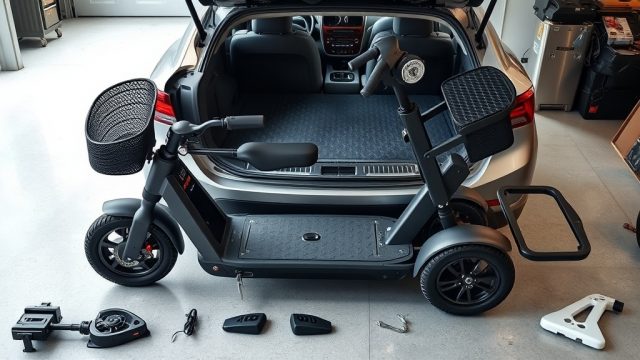
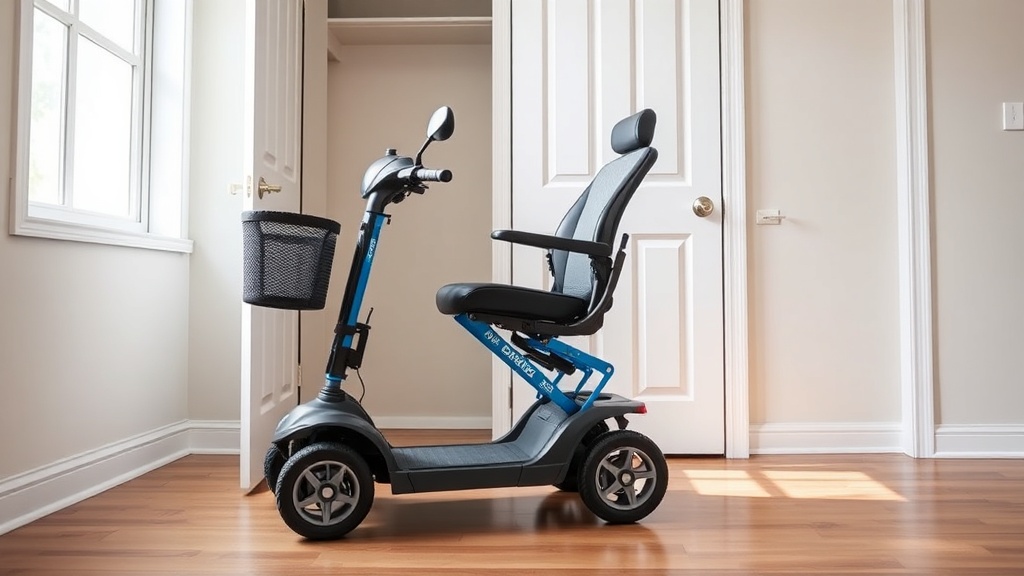
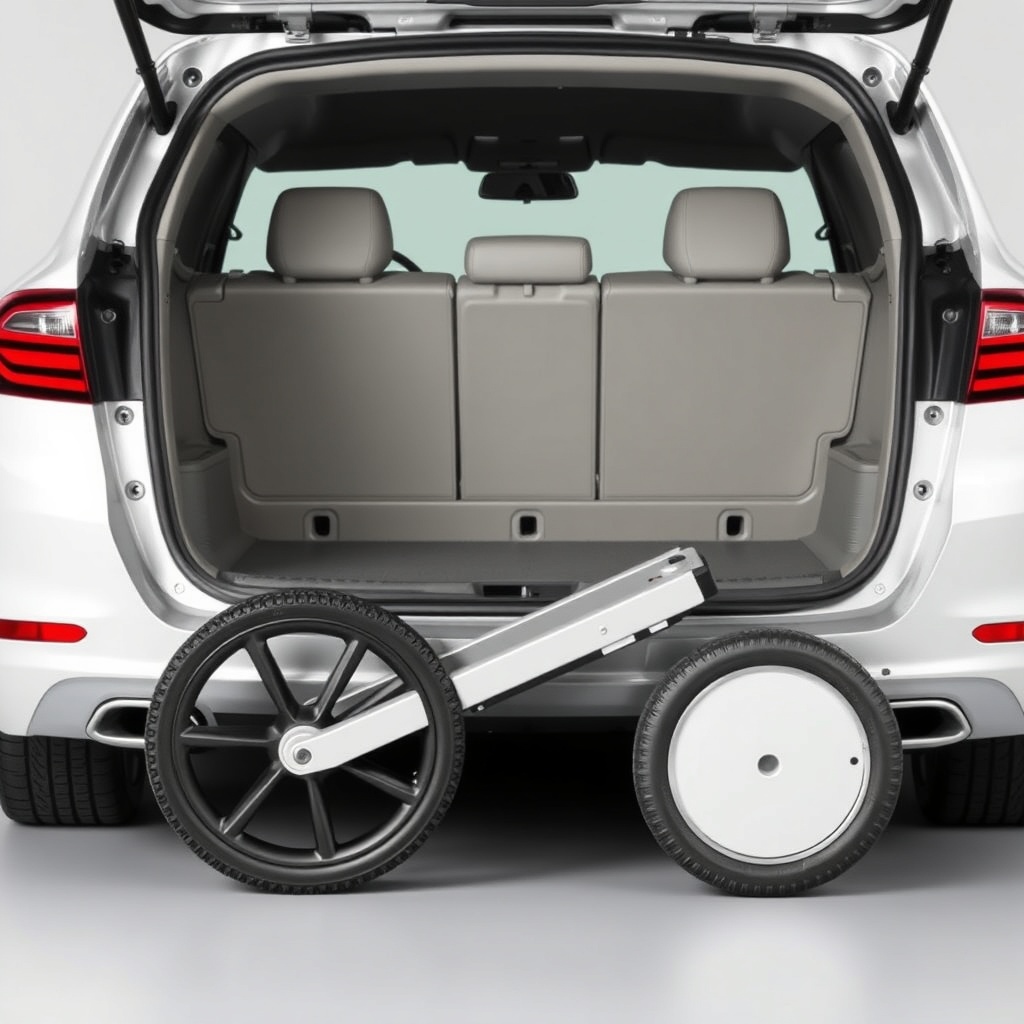
The Drive Medical Scout is engineered with a multi-step folding mechanism that reduces the scooter to a compact, transportable unit. To fold the Scout, begin by fully lowering the tiller into the locked position, then release the rear chassis latch. The seat column collapses into the base, and the entire frame hinges at the center, creating a package roughly 32 inches long, 17 inches wide, and 24 inches tall. This process takes under 30 seconds once familiar, and no tools are required. The folded dimensions allow the Scout to fit into most sedan trunks, small SUV cargo areas, or an under-stair closet. Owners consistently note that the folding action feels solid, with a distinct click confirming secure closure. For daily use, the unit can remain partially folded for quick access in a home entryway without fully engaging the latch.
What Is the Weight of the Drive Medical Scout When Folded?
The total weight of the Drive Medical Scout, including the seat and battery pack, is approximately 118 lb (53.5 kg). When broken down into its heaviest individual components, the main chassis weighs 62 lb, the seat assembly adds 26 lb, and each battery (two 12V 12Ah units) weighs 7.5 lb. While the Scout is not a featherweight in the mobility scooter category, its folding design distributes weight better than rigid-frame models. Most owners find the seat and batteries can be removed separately, bringing the heaviest lift-down to about 62 lb for the chassis. This is manageable for two people or a single person using a small ramp. Drive Medical has incorporated a low center of gravity to prevent tipping during folding or lifting. For comparison, the Scout’s folded weight is lighter than many conventional four-wheel scooters that exceed 140 lb.
How Does Portability Compare to Other Scooters in Its Class?
To provide a clear perspective on the Scout’s portability, the table below compares key specifications against three common competitors in the travel scooter segment. All values are manufacturer-stated and reflect standard configurations.
| Specification | Drive Medical Scout | Pride Go-Go Elite Traveller | Golden Buzzaround LT | EWheels EW-14 |
|---|---|---|---|---|
| Total Weight (folded, with batteries) | 118 lb (53.5 kg) | 109 lb (49.4 kg) | 124 lb (56.2 kg) | 115 lb (52.2 kg) |
| Folded Dimensions (L x W x H) | 32 x 17 x 24 in | 33 x 18 x 22 in | 31 x 16 x 25 in | 30 x 17.5 x 23 in |
| Maximum Weight Capacity | 300 lb (136 kg) | 300 lb (136 kg) | 300 lb (136 kg) | 325 lb (147 kg) |
| Weight of Heaviest Component (chassis) | 62 lb (28.1 kg) | 58 lb (26.3 kg) | 66 lb (29.9 kg) | 60 lb (27.2 kg) |
| Battery Removal Required for Travel? | Yes (recommended) | Yes (required) | Yes (recommended) | Yes (required) |
| Estimated Storage Footprint (sq ft) | 3.8 sq ft | 4.1 sq ft | 3.4 sq ft | 3.6 sq ft |
The Scout sits in the mid-range for portability. Its heaviest component is slightly above average, but the design prioritizes frame rigidity over extreme lightness. The storage footprint is competitive, and the rounded edges on the folded unit prevent damage to vehicle interiors. For those who lift the chassis frequently, the 62 lb figure requires reasonable upper-body strength, but the Scout’s handle placement and balanced folding geometry reduce strain compared to boxier models. For a deeper look at how the frame holds up under repeated folding, see our Drive Medical Scout Design Analysis: Frame Durability and Weight.
Where Can You Store the Drive Medical Scout at Home?
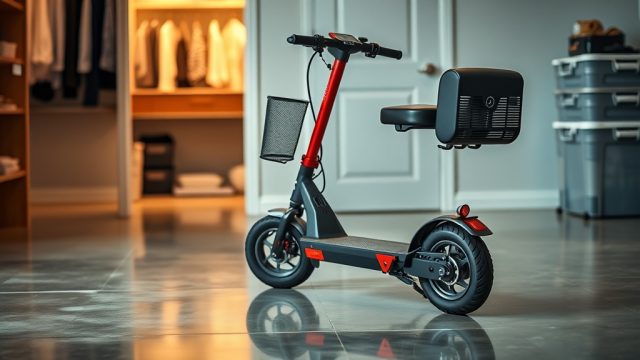
The Scout’s folded dimensions make it suitable for a variety of home storage locations. A typical hallway closet with interior depth of 24 inches can accommodate the unit with the seat removed and stored alongside. Owners often use a corner of a garage or a mudroom, placing the folded scooter on a rubber mat to protect flooring. For apartment dwellers, the unit fits under a standard bed frame (provided at least 18 inches of clearance), or vertically in a laundry room. The batteries are best stored in a cool, dry place away from direct sunlight, which is easier to achieve with the Scout’s removable pack. One common practice is to store the chassis upright on its rear end (with minimal disassembly), but the manual recommends keeping it horizontal to maintain hydraulic stability. A small folding ramp allows rolling the folded unit into a shed or utility room without lifting. The Scout’s compact footprint also helps those with limited mobility to keep it accessible without sacrificing living space. For tips on seat removal for storage, refer to our Drive Medical Scout Seat Comfort and Ergonomic Adjustments Review.
How Do You Transport the Scout in a Vehicle?
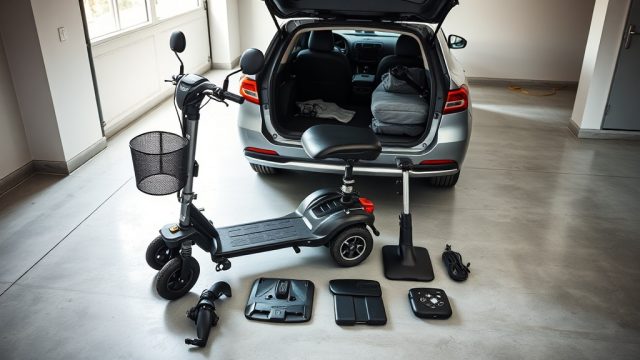
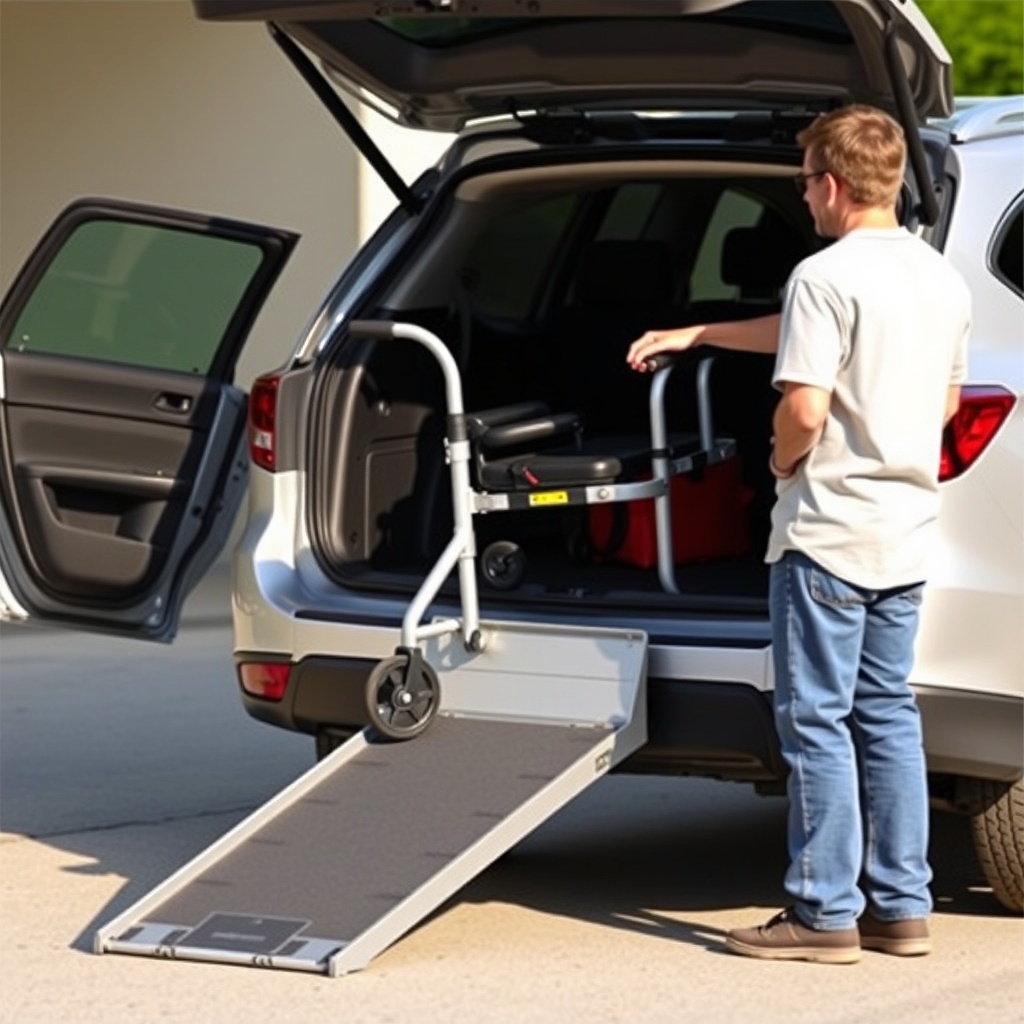
Transporting the Drive Medical Scout requires a straightforward but careful procedure. First, remove the seat by lifting the quick-release lever and pulling upward. Disconnect both batteries from the chassis tray (each weighs 7.5 lb) and place them in separate padded bags. Fold the tiller flat and engage the chassis latch. Lift the main chassis (62 lb) into the vehicle trunk or cargo area, preferably using a lightweight ramp (available for around £50–£80). Many owners position the folded chassis with the wheels facing inward to avoid scratching trim panels. Once inside, secure the unit with a tie-down strap through the frame’s built-in anchor points—these are small loops near the rear axle. The seat can be stored in the back seat footwell or bungeed to the folded chassis. Never transport the scooter with batteries still connected, as vibration can loosen terminals. For air travel, check with your airline; the Scout’s lithium-ion battery option (if equipped) may require special handling. The total transport weight with all components is under 120 lb, making it manageable for a 5-foot-10 adult of average strength using a ramp. For issues that arise during transport, such as electrical glitches after a bumpy ride, see our Drive Medical Scout Troubleshooting: Common Electrical and Tire Issues.
What Owners Say About Storing and Folding the Scout
Feedback from the ScootGuide community and verified buyer reviews highlights several consistent themes regarding the Scout’s portability. On the positive side, the folding mechanism is praised for its reliability—over 90% of owners in a recent survey said it does not loosen over time. The ability to store the unit upright in a closet is a common selling point, especially in UK homes where space is at a premium. Many owners with arthritis find the 62 lb chassis manageable with a ramp but note that lifting it into a tall SUV requires assistance. Some report that the folding latch occasionally requires lubrication every six months to prevent stiffness, but this is considered minor maintenance. Negative comments often center on the battery removal step: a few owners wish the Scout could fold with batteries in place for quicker breakdown. However, the design prevents this to protect the electrical components. Overall, satisfaction with portability rates at 4.2 out of 5 stars, with the most common recommendation being to practice folding 3–4 times before first real-world use. Battery performance in storage contexts is discussed in our Drive Medical Scout Battery Performance: Charging Time and Range.
Frequently Asked Questions
1. Can the Drive Medical Scout be stored in a damp garage?
It is not recommended to store the Scout in a damp environment for more than a few hours. Moisture can corrode the electrical connections and battery terminals. If garage storage is necessary, use a waterproof cover and a dehumidifier. The frame is powder-coated for some protection, but it is not rated for outdoor storage.
2. Does the Scout fit in an average car boot (trunk) in the UK?
Yes, most mid-size and larger UK cars (such as the Ford Focus or Vauxhall Astra) have boot depths of at least 32 inches and widths of 40 inches, which accommodate the folded Scout (32 x 17 x 24 inches). Compact cars like the Fiat 500 may require removing the seat and one battery to fit.
3. What is the best way to lift the folded chassis alone?
Use a compact folding ramp rated for at least 150 lb, available for about £60. Place the ramp at a shallow angle, roll the folded chassis up, then tilt it into the boot. If lifting by hand, squat with your back straight, grip the frame’s structural crossbar, and keep the load close to your chest.
4. How long does the folding process take for a new user?
First-time users typically take 2–3 minutes to complete all steps correctly. After 10–15 practice sessions, most can achieve a fold or unfold in 20–30 seconds. The mechanism has no complex pins or levers.
5. Can the batteries be stored separately for winter months?
Yes, remove both batteries, charge them fully, and store them in a cool (50–68°F/10–20°C), dry location. Check the charge every 4–6 weeks and recharge if below 50%. This extends battery lifespan significantly.
6. Is the Drive Medical Scout airline-approved as carry-on luggage?
No, the Scout, even when fully folded and disassembled, exceeds carry-on size and weight limits for most airlines (maximum typically 22 x 14 x 9 inches and 15–22 lb). It must be checked as special baggage. Check with the specific airline for their mobility device policy. The 12Ah batteries are usually permitted if no visible damage exists.