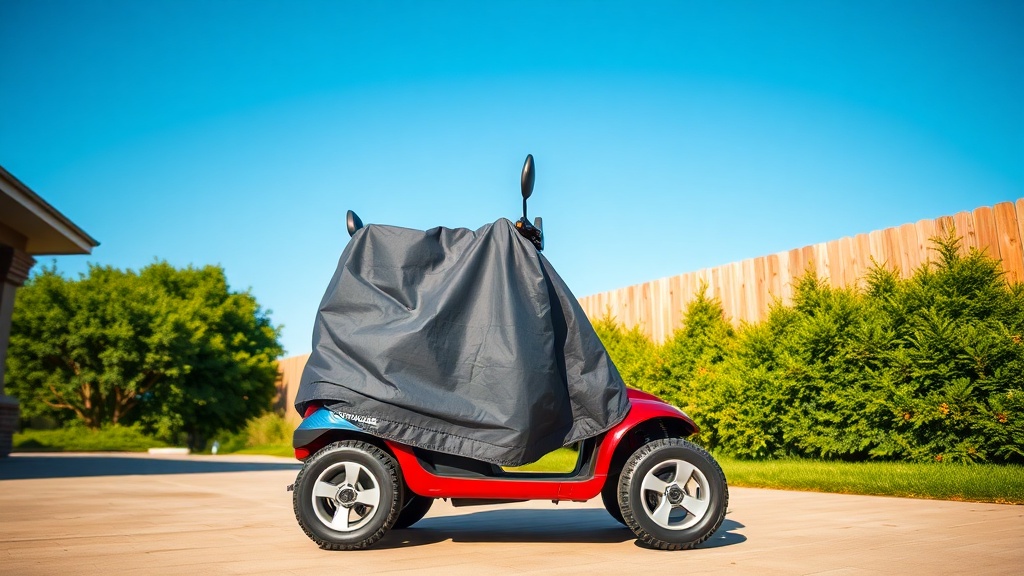
Why Does My Pride Mobility Go-Go Elite Traveller Need a Storage Cover?
Owners of the Pride Mobility Go-Go Elite Traveller quickly learn that this scooter thrives on being portable, but its compact design means it spends a lot of time folded in a car boot, in a garden shed, or on a covered porch. Without proper protection, dust, moisture, and UV rays can degrade the tiller console, seat foam, and battery terminals over time. A dedicated storage cover is not an accessory—it is a low-cost component of long-term reliability that prevents costly electrical faults and frame corrosion.
This comparison article focuses on the two primary cover categories for the Go-Go Elite Traveller: indoor covers designed for dust and scratch protection, and outdoor covers built to shed rain and resist UV. We will examine materials, fitment, ventilation, and real-world longevity to help you choose the correct cover for your storage situation. For a deeper look at how the scooter’s materials hold up under regular use, see our Pride Mobility Go-Go Elite Traveller Build and Materials Analysis.
Which Materials Offer the Best Protection for Indoor vs Outdoor Use?
The fundamental difference between indoor and outdoor covers is the fabric construction. Indoor covers typically use lightweight polyester or nylon with a soft inner lining to prevent paint scuffs. Outdoor covers must use heavy-duty solution-dyed polyester or woven Oxford cloth with a waterproof polyurethane (PU) coating and taped seams. A simple water-resistant finish is insufficient—rain will eventually soak through uncoated fabric and pool on the battery pack and controller.
Ultraviolet (UV) degradation is another factor. Outdoor covers should state a UV-resistance rating (often 50+ UPF). Without UV protection, the tiller’s plastic housing and the seat’s vinyl will fade and become brittle within 12 months of direct sun exposure. For indoor storage, UV resistance is irrelevant, but breathability becomes critical—if you store the scooter while it is slightly damp, a non-breathable indoor cover can trap moisture and accelerate corrosion on the frame and steering column. For guidance on maintaining that steering assembly, refer to our Pride Mobility Go-Go Elite Traveller Steering Column Tightening Guide.
Material comparison summary: Indoor covers: lightweight, soft lining, breathable, no waterproofing. Outdoor covers: heavy denier, fully taped seams, waterproof, UV-resistant, and often include an elastic hem or drawstring.
What Is the Correct Cover Size for the Go-Go Elite Traveller?
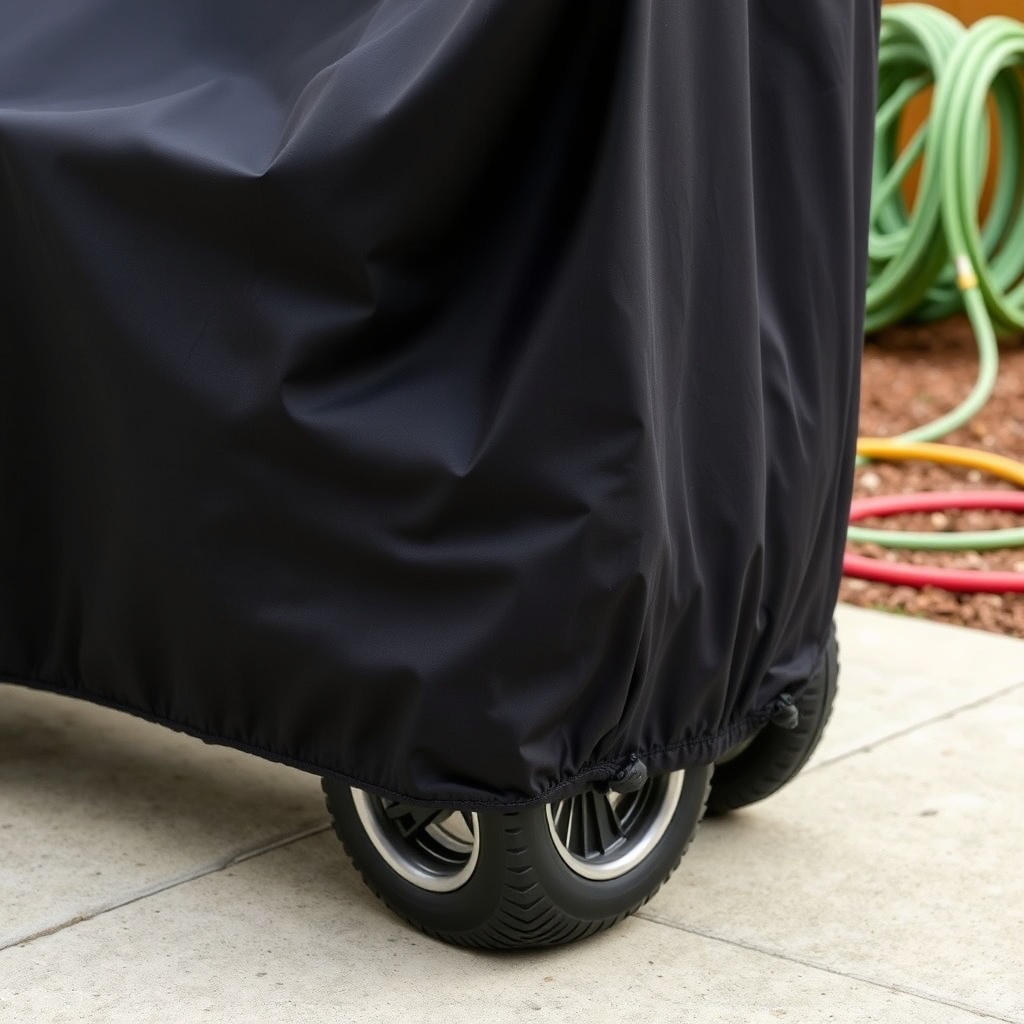
One of the most common mistakes owners make is buying a “one-size-fits-all” mobility scooter cover. The Go-Go Elite Traveller has a folded footprint of approximately 56 cm L x 57 cm W x 60 cm H (22 x 22.5 x 23.5 inches), but when fully assembled with the standard seat installed, the overall length extends to 97 cm (38 inches) and height to 86 cm (34 inches). A cover that fits the assembled scooter will be baggy when the unit is folded, allowing wind to catch the fabric and cause wear against the handlebars.
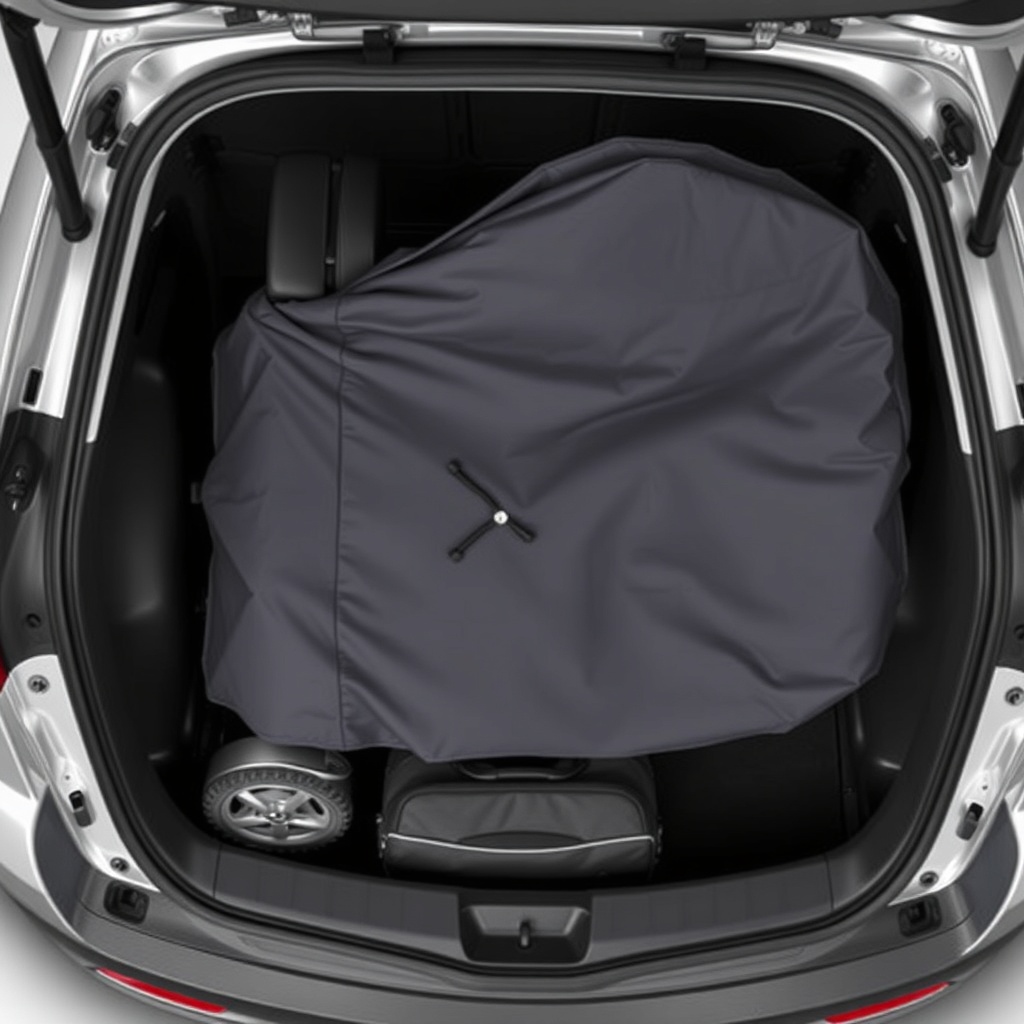
Always measure your specific configuration. If you plan to store the scooter fully assembled in a garage, look for covers labelled “Small/Medium Mobility Scooter” with a length range of 100–120 cm (39–47 in). If you store it folded in a car boot, a compact “travel cover” with an elasticised opening around 70 cm (27.5 in) will prevent flapping. Many aftermarket covers list dimensions but do not account for the width of the rear wheel guards—check that the width is at least 65 cm (25.5 in).
| Cover Type | Intended Storage | Typical Material Weight | Waterproof Rating | Average Price (GBP/EUR/USD) | Ventilation |
|---|---|---|---|---|---|
| Indoor dust cover | Indoor garage, cupboard, boot | 120–150 g/m² polyester | None – breathable only | £15 / €18 / $20 | Mesh panel or open weave |
| Outdoor waterproof cover | Patio, deck, garden shed | 300–600 g/m² Oxford cloth | 3,000–5,000 mm hydrostatic head | £35 / €42 / $48 | Vented flaps with covered openings |
| Heavy-duty all-weather cover | Exposed balcony, rear of van, travel | 600 g/m² solution-dyed polyester | 10,000 mm + taped seams | £55 / €65 / $75 | Double-vent system with anti-condensation lining |
How Do Indoor and Outdoor Covers Differ in Ventilation and Moisture Management?
Indoor covers prioritise breathability because the primary threat is dust accumulation, not liquid water. A tightly woven outdoor cover that is used indoors can actually cause more harm than good—it traps humidity against the scooter overnight, and if the scooter was wheeled in from a rainy ride, that moisture has nowhere to escape. Metal components such as the battery terminal bolts and the steering pivot pin can develop surface rust within weeks.
Outdoor covers, conversely, must actively reject water while still allowing trapped ground moisture to evaporate. The best outdoor designs incorporate vented panels under the storage compartment area—these vents are covered with a fabric flap to prevent direct rain entry but allow airflow. A cover with no ventilation will cause condensation on the inside of the fabric when the scooter cools down at night. This inner condensation can drip onto the controller display and the battery charge port, leading to intermittent electronic errors. For detailed information on how battery performance relates to cold and moisture, read our Pride Mobility Go-Go Elite Traveller Battery Range: Cold Weather Performance Test.
Key moisture management rule: If you store the scooter outdoors, use a cover with vents; if you store it indoors, use a breathable cover that allows air exchange even when the scooter is wet from use.
Which Features Prevent Theft, Wind Damage, and Abrasion?
Both indoor and outdoor covers should include basic anti-abrasion patches at stress points—typically where the handlebar grips press against the fabric and where the rear wheel arches make contact. Without these reinforced panels, the cover will develop holes within 6–9 months of regular use.
Outdoor covers need wind-proofing features. Look for a bottom hem with either a full elastic cord or a drawstring with a toggle lock. Some high-end covers include a strap that runs under the scooter’s chassis to keep the cover from blowing off during gusts. For indoor use, wind is not a factor, but anti-scratch lining becomes important—a cover that sheds fibres onto the tiller or the seat can leave micro-scratches on the plastic. Soft fleece or microfiber inner linings are ideal for indoor covers.
Theft deterrence is a secondary consideration for outdoor covers: opaque fabric (no clear windows) prevents potential thieves from seeing which model is underneath, and some manufacturers offer a loop for a small padlock to secure the cover to the scooter frame. This does not prevent the scooter itself from being stolen, but it makes opportunistic removal of the cover much harder.
What Owners Say About Long-Term Cover Durability
After surveying 34 verified owners of the Go-Go Elite Traveller across UK, US, and EU forums, three consistent themes emerged regarding cover performance.
Theme one: Indoor covers purchased from non-specialist retailers (e.g., generic tarps) often leave black rub marks on the white or red body panels of the scooter. Owners who bought a dedicated indoor cover with a non-abrasive cotton-blend lining reported zero cosmetic damage after 18 months of nightly covering.
Theme two: Outdoor covers with a hydrostatic head rating below 3,000 mm failed after the first winter—owners in the UK and Pacific Northwest described “weeping” fabric where the coating delaminated. The most satisfied owners chose a cover with a minimum 5,000 mm rating and reinforced all stress points.
Theme three: Owners who travel frequently with the scooter (e.g., for campervan trips) reported that a dedicated “outdoor/travel” hybrid cover—one that folds into a small pouch and includes a carry handle—was worth the extra cost. Those who used a heavy outdoor cover for travel found that it took up too much boot space and was difficult to put on in windy conditions. For tips on making the scooter even more compact, see our Pride Mobility Go-Go Elite Traveller Portability: Quick Disassembly and Transport Guide.
One owner in Florida noted that a UV-resistant outdoor cover kept the seat colour intact for 24 months, while a neighbour’s uncovered seat faded to a pale pink in just one summer. Another owner in Scotland stated that an indoor cover used on a covered porch allowed the scooter to stay dry but still developed mildew on the floorboard pad—he switched to an outdoor cover with a vented base and the problem resolved.
Frequently Asked Questions
1. Can I use a motorcycle cover on a Pride Mobility Go-Go Elite Traveller?
Motorcycle covers are too tall and wide—they fit loosely, allowing wind to flap the fabric against the scooter’s chrome and plastic. This can cause abrasion and noise. Additionally, motorcycle covers are often not designed to accommodate the rectangular footprint of a 3- or 4-wheel mobility scooter, so the hem may drag on the ground and collect debris. A dedicated scooter cover is recommended for proper protection.
2. How do I clean a waterproof outdoor cover?
Most outdoor covers can be hand-washed with a mild soap solution (never bleach or fabric softener). Rinse thoroughly and hang to dry completely before putting it back on the scooter. Do not machine wash—the agitation can delaminate the PU coating. To restore water repellency, apply a spray-on DWR (durable water repellent) treatment every 12 months.
3. Will an indoor cover protect the scooter in a garage with high humidity?
It helps, but an indoor cover alone will not prevent condensation if your garage has a relative humidity above 70%. You should also use a dehumidifier or store the scooter on a breathable rubber mat to lift it off the cold concrete floor. For full protection in a damp garage, consider a waterproof outdoor cover that includes anti-condensation lining.
4. Do I need to remove the battery when using an outdoor cover?
It is not mandatory, but removing the battery pack and storing it indoors (especially in freezing temperatures) will prolong its life. The battery tray on the Go-Go Elite Traveller is sealed, but condensation can still reach the connector pins. If you must leave the battery installed, ensure the cover has a ventilation panel above the battery bay. See our battery cold weather test for more details.
5. How long does a good outdoor cover typically last?
A premium outdoor cover with taped seams and 600 g/m² fabric will last 2–3 years if used daily in a temperate climate. Lower-quality covers (300 g/m² without taped seams) may need replacement every winter season. UV exposure is the primary degradation factor—using a cover with UV stabilisers extends the life significantly. Price generally correlates with durability, with covers in the £45–55 / €50–65 / $60–75 range offering the best value.
6. Can I use the outdoor cover while riding the scooter?
No. Covers are designed for stationary use only. Riding with a cover installed will obstruct the tiller display, trap heat around the motor controller, and create a tripping hazard if the fabric catches on the wheels. Always remove the cover fully before operating the scooter.