How Do I Know When the Drive Medical Scout Needs a Battery Replacement?
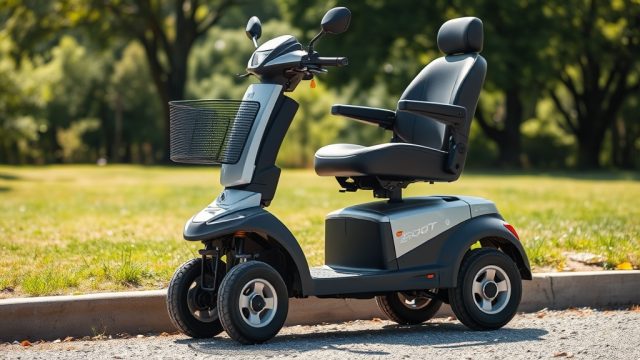
The Drive Medical Scout is a robust mobility scooter, but its lead-acid or lithium battery pack is a consumable component that degrades over time. Owners typically notice the first signs of battery wear between 12 and 18 months of regular use. Unlike a car battery that fails suddenly, a mobility scooter battery gives clear warnings before complete failure. If the Scout struggles to climb a moderate incline that it previously handled with ease, or if the range drops from the standard 12–15 miles to under 6 miles on a full charge, a replacement is overdue. Another common symptom is the battery gauge showing a full charge after only two hours of charging, then dropping to red within 10 minutes of riding.
Temperature extremes accelerate degradation. Users who store their Scout in an unheated garage during winter often find the battery holds less capacity. If the integrated charger light stays green immediately after plugging in (indicating a “full” battery that actually has minimal voltage), that is a clear sign of sulfation inside the cells. Regular terrain handling on grass or gravel also drains the battery faster and can shorten overall lifespan. When the Scout no longer completes a standard daily route—such as a trip to the local shops—without the battery indicator flashing red, it is time to source a replacement.
What Batteries Are Compatible with the Drive Medical Scout?
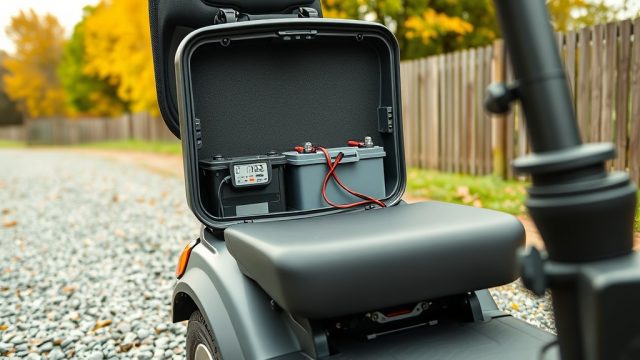
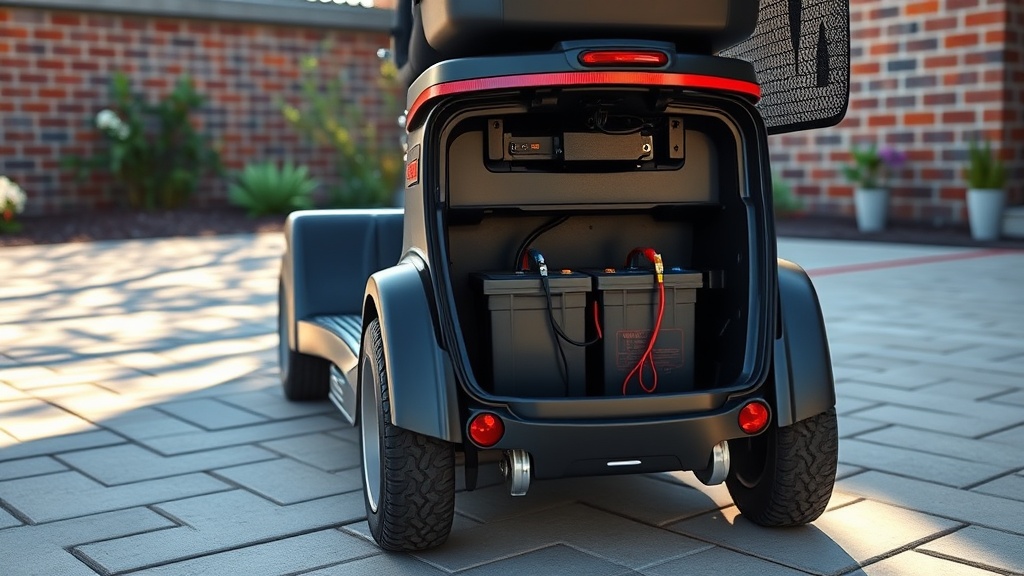
Choosing the correct replacement battery is critical for safety and performance. The Drive Medical Scout primarily uses two 12V batteries wired in series to produce 24V. The standard factory configuration uses two 12V, 35Ah sealed lead-acid (SLA) batteries (Group U1 size). However, many owners upgrade to a single 24V lithium-ion battery pack that fits in the same tray. Below is a comparison table of the most common compatible options available in the UK market (prices in GBP £).
| Battery Type | Voltage | Capacity (Ah) | Estimated Range | Weight (each) | Typical Price (£) |
|---|---|---|---|---|---|
| Standard SLA (Yuasa NP35-12I) | 12V x2 (24V system) | 35Ah | 10–14 miles | 11.5 kg | £85–£110 (pair) |
| High-capacity SLA (PowerStar PS-35) | 12V x2 (24V system) | 35Ah | 11–15 miles | 12.0 kg | £95–£130 (pair) |
| Lithium-ion drop-in (Enerwatt 24V/10Ah) | 24V (single unit) | 10Ah (equiv. to 35Ah SLA) | 12–18 miles | 3.2 kg | £350–£450 |
| Lithium iron phosphate (LiFePO4, BMS integrated) | 24V (single unit) | 36Ah | 15–20 miles | 4.1 kg | £420–£550 |
Prices are approximate as of 2025 and include VAT. Always verify connector type (Anderson Powerpole or proprietary puck connector).
Lithium options cost more upfront but last three to five years versus one to two years for SLA, making them cost-effective over time. They also eliminate the need for watering (maintenance-free) and charge faster. However, the Scout’s charger must be replaced or set to a lithium profile if switching chemistry. Owners who frequently tackle hills or carry loads near the weight limit test maximum should opt for the LiFePO4 pack for consistent voltage delivery under load.
How Do I Replace the Drive Medical Scout Batteries? (Step-by-Step)
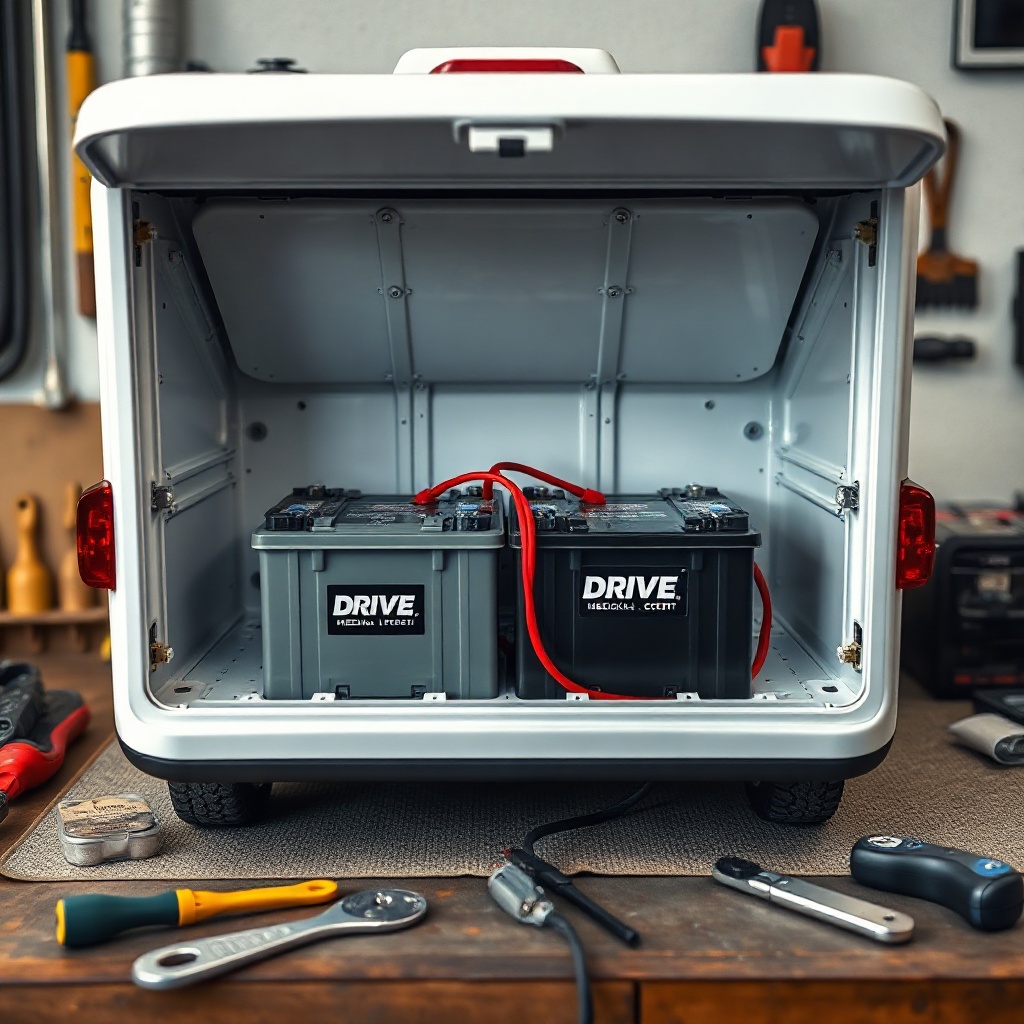
Battery replacement on the Scout is straightforward for anyone comfortable with basic tools. The process takes approximately 30 to 60 minutes. You will need a socket set (10mm and 13mm), flathead screwdriver, safety gloves, and a multimeter for verification. Always work on a flat surface and disconnect the charger before starting.
- Step 1: Remove the seat. Lift the seat off the base by pulling the seat lever. The Scout’s seat detaches without tools—simply slide it backward and lift.
- Step 2: Access the battery tray. Locate the battery cover at the front of the footwell. On the Drive Medical Scout, this is a black plastic shroud secured by two 10mm bolts at the front edge. Remove these bolts and lift the cover off.
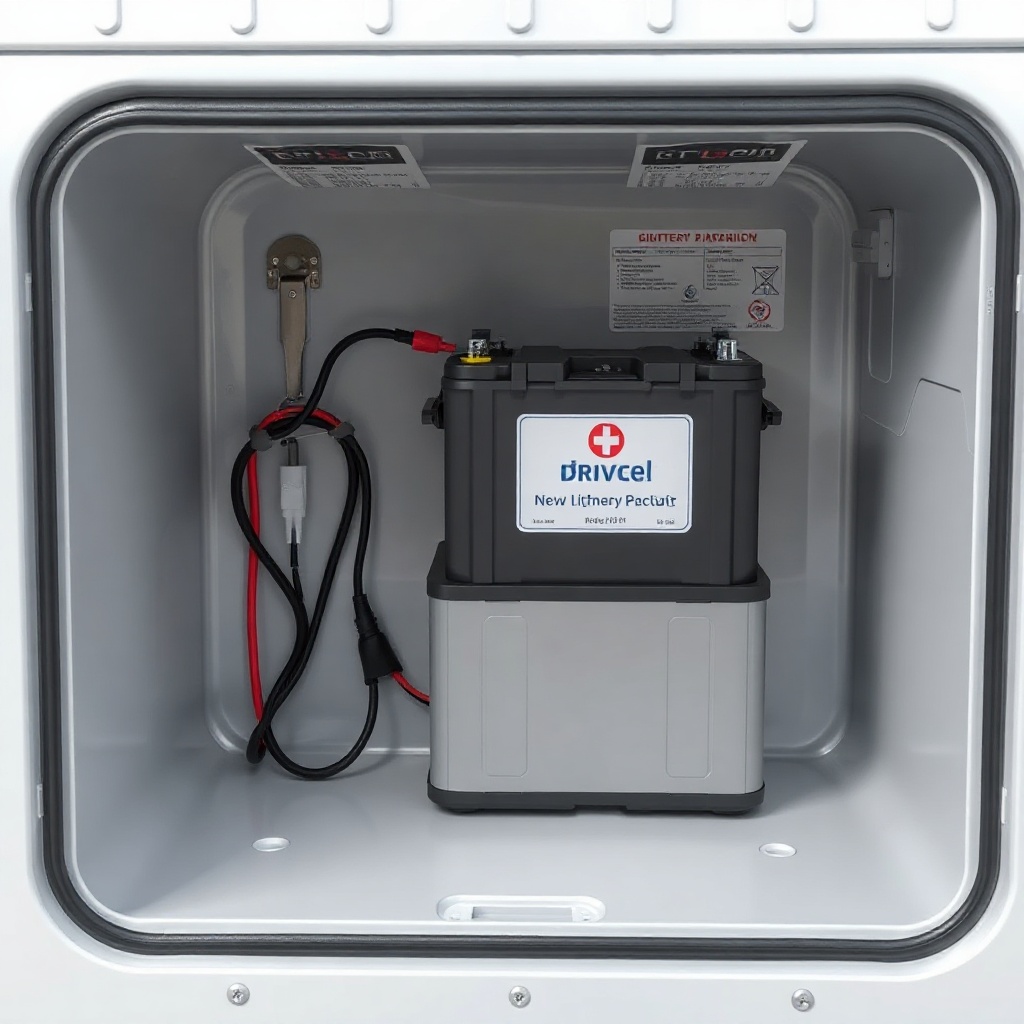
- Step 3: Disconnect the old batteries. Take a photo of the wiring for reference. Using a 10mm socket, disconnect the negative (black) lead first, followed by the positive (red). Lift each battery out using the built-in handles (or strap if aftermarket). Note their orientation—some trays have molded guides to ensure correct placement.
- Step 4: Install the new batteries. Place the new batteries exactly as the old ones were positioned. Reconnect the positive lead to the positive terminal first, then the negative to the negative terminal. Tighten securely but do not overtighten—terminal damage can occur.
- Step 5: Test voltage. Use a multimeter to confirm the total voltage between the pack’s main connector reads 24V–26V (still disconnected from the controller). If less than 23V, the batteries may need a charge or are faulty.
- Step 6: Reassemble and charge. Replace the battery cover and seat. Plug in the charger; a full initial charge for SLA batteries takes 8–12 hours. Lithium packs typically reach full charge in 3–5 hours.
After the first charge, perform a short test ride on flat ground. If the scooter hesitates or the charger shows a fault code, double-check all connections. For a more detailed visual guide on the Scout’s undercarriage layout, consult our frame stress test analysis, which shows the battery tray positioning relative to the frame rails.
How Do I Choose Between SLA and Lithium Batteries for the Scout?
The decision between sealed lead-acid (SLA) and lithium depends on budget, usage, and maintenance preferences. SLA batteries remain the most popular choice due to their low upfront cost—typically under £120 for a pair. They perform reliably in temperate conditions and are widely available from mobility dealers. However, SLA packs suffer from the “memory effect” over time if not fully discharged before recharging, and they degrade faster in hot or cold environments. The added weight (23kg total for a pair) also contributes to the Scout’s overall stability, which is beneficial on uneven surfaces like gravel, as tested in our terrain handling review.
Lithium batteries, particularly LiFePO4, offer multiple advantages. They weigh only 3–5kg total, making the Scout significantly lighter and easier to lift for transport. They deliver consistent voltage until the last 5% of charge, so the Scout does not slow down as the battery drains. The cycle life is 2,000–5,000 charges versus 300–500 for SLA. For users who ride daily or rely on the Scout for essential errands, the higher initial cost (around £400–£550) pays for itself within 18 months through reduced replacement frequency. One drawback: the Scout’s stock charger may not have a lithium profile, requiring a new charger priced at £60–£100. Always verify that the lithium pack includes a Battery Management System (BMS) that communicates with the controller.
What Are Common Pitfalls When Replacing Scout Batteries?
Several mistakes can turn a simple replacement into an expensive repair. The most frequent error is reversing the terminal connections. While the Scout’s controller has reverse polarity protection on many models, older units may not. A reversed connection can instantly blow the main fuse (located near the battery tray) or damage the controller. Always double-check the red-to-red, black-to-black wiring using the photo taken during disassembly.
Another common pitfall is using standard car batteries instead of deep-cycle batteries. Car batteries are designed for short, high-current bursts to start engines, not for sustained discharge over hours. They will fail within weeks in a scooter application. Ensure the replacement battery is clearly marked “deep-cycle” or “mobility scooter battery.” Additionally, over-tightening terminal nuts can crack the lead posts on SLA batteries, causing intermittent connection and eventual failure. Use a torque wrench set to 4–6 Nm if available. Finally, failing to tighten the battery hold-down bracket (if present) allows batteries to shift during turns, which can break internal plates. Check that the batteries are seated snugly in the tray.
What Owners Say About Drive Medical Scout Battery Life and Replacement
Feedback from Scout owners across forums and review platforms reveals a polarized experience based on maintenance habits. Those who charge the battery after every ride, even short ones, report SLA batteries lasting up to two years. Owners who let the battery drain completely before recharging often replace them at the one-year mark. “My first set of SLA batteries lasted 14 months. I switched to a lithium pack from a specialist supplier, and after two years, I still get the same range as day one,” comments Mark T., a Scout user from Manchester.
Multiple owners praise the simplicity of the replacement process. “I’m not handy at all, but swapping the batteries on the Scout took me 40 minutes with a YouTube video. Saved £80 in labour,” share another review on a mobility accessories site. However, some caution against cheap unbranded batteries found on online marketplaces. “I bought a £50 pair of ‘compatible’ batteries from an auction site. They died in six months and leaked acid on the tray,” warns Susan P. from Bristol. The consensus among experienced owners is to invest in reputable brands like Yuasa, PowerStar, or a certified lithium drop-in kit. For those storing the Scout outdoors, the indoor vs outdoor cover guide recommends removing the battery during extended storage to prevent self-discharge and cold-related capacity loss.
Frequently Asked Questions
1. Can I use a car battery charger on my Scout’s batteries?
No. Car chargers deliver high amperage and can damage the Scout’s 24V system or the batteries themselves. Always use the charger provided by Drive Medical or a compatible smart charger rated for 24V deep-cycle batteries.
2. How often should I replace the batteries?
With daily use, expect SLA replacement every 12–18 months. Lithium packs last 3–5 years. Replace immediately if the battery case is swollen, cracked, or leaking.
3. Will a lithium battery improve the Scout’s snow performance?
Yes, lithium batteries maintain voltage better in cold temperatures than SLA. Our snow and ice test shows lithium-equipped Scouts retain 90% range at -5°C versus 60% for SLA.
4. What is the correct battery cable routing in the Scout tray?
Route cables away from the seat post and moving parts. Ensure the red and black wires do not rub against the frame edges—wrap them in split loom tubing if needed.
5. Can I upgrade to a higher Ah battery for more range?
Yes, but ensure the physical dimensions fit the Scout’s battery tray. Many owners fit 40Ah SLA batteries (slightly taller) by removing a foam spacer. Verify the charger can handle the larger capacity—charging time will increase.
6. Why does my new battery show only 60% charge after first use?
New SLA batteries arrive with a partial charge (typically 40–60%). Perform three full discharge/recharge cycles to reach full capacity. This is normal and called “forming” the battery.